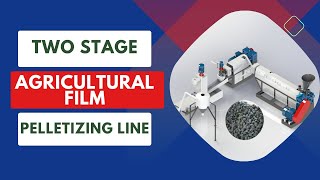
Equipment video
LDPE Film Strand Pelletizing Line
About this video
This plastic film granulation line recycles film materials such as PE, LDPE, LLDPE, HDPE, PP, OPP, BOPP, CPP and BOPET into pellets. In strand pelletizing, the melt is extruded as strands that are cooled and cut into pellets.
The main advantages are higher output, flexible pelletizing options and well-plasticized pellets without pores. The line can be customized to the customer’s material and requirements.
Key points
- Recycles PE, PP and many other film materials
- Strand pelletizing: strands cooled and cut into pellets
- Well-plasticized pellets without pores
- Configuration customized to the material
What the video shows
- LDPE film is fed into the extruder and melted.
- The melt is extruded into strands and cooled.
- Strands are cut into uniform pellets.
Typical configuration
- Materials
- PP, PE, HDPE, LDPE, LLDPE, BOPP and more
- Cutting in this video
- Strand
- Stages
- Single or double
- Pellet quality aim
- Well plasticized, without pores
Questions buyers ask
Strand or water-ring pelletizing for film?
Both are used. Strand cutting suits a wide range of polymers and makes pellet size easy to control; water-ring cutting is compact and common for PE film. The choice depends on material and output.
Why do pellets sometimes have pores?
Pores usually come from moisture or volatiles in the melt. Good plasticizing, dry feed and degassing keep pellets solid.