Equipment video
PET Pelletizing Line
About this video
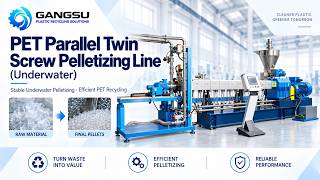
This PET pelletizing line turns PET waste into high-quality pellets. It combines an extruder, a cooling system and a cutting unit.
PET flakes are fed into the extruder, where they are melted, homogenized and extruded. The molten PET is then cooled and cut into uniform pellets, with temperature control keeping processing conditions and pellet quality consistent.
Key points
- PET flakes fed into the extruder
- Melting, homogenizing and extrusion
- Cooling and cutting into uniform pellets
- Temperature control for consistent quality
What the video shows
- PET flakes are fed into the extruder for melting and homogenization.
- The molten PET is extruded and cooled.
- It is cut into uniform PET pellets.
Typical configuration
- Screw
- Twin-screw
- Pellet cutting (standard line)
- Water-cooled strand
- Feed
- Clean, dry PET flakes
- Output
- PET pellets
Questions buyers ask
Why must PET flakes be dry before pelletizing?
Moisture in molten PET causes hydrolysis, which lowers intrinsic viscosity and weakens the pellets. Flakes are dried or crystallized before extrusion.
How is pellet quality protected?
By clean, dry feed, vacuum degassing and melt filtration. Together they limit IV loss, black specks and odor.