Agricultural Film Recycling: How to Remove Sand, Soil and Organic Contamination
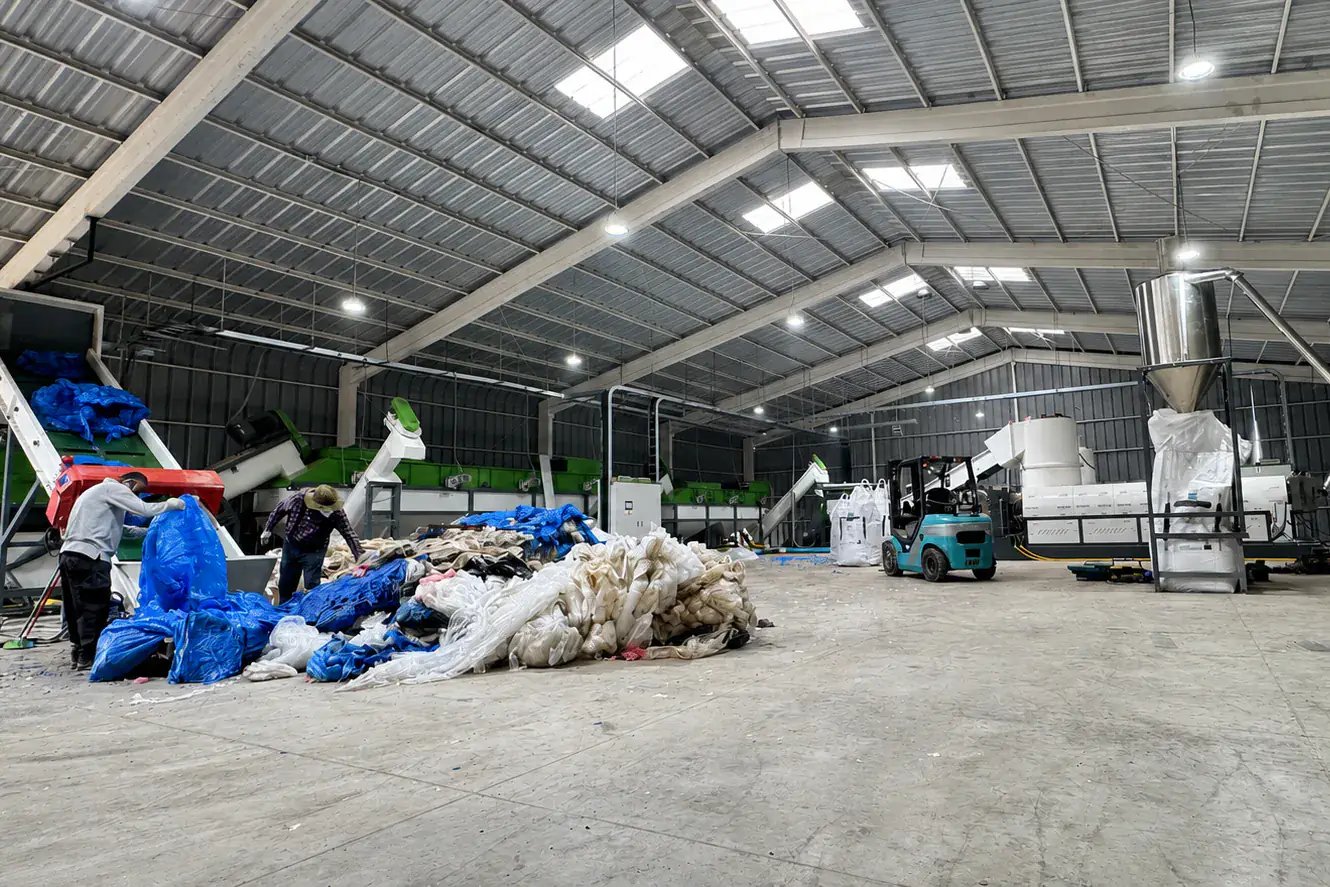
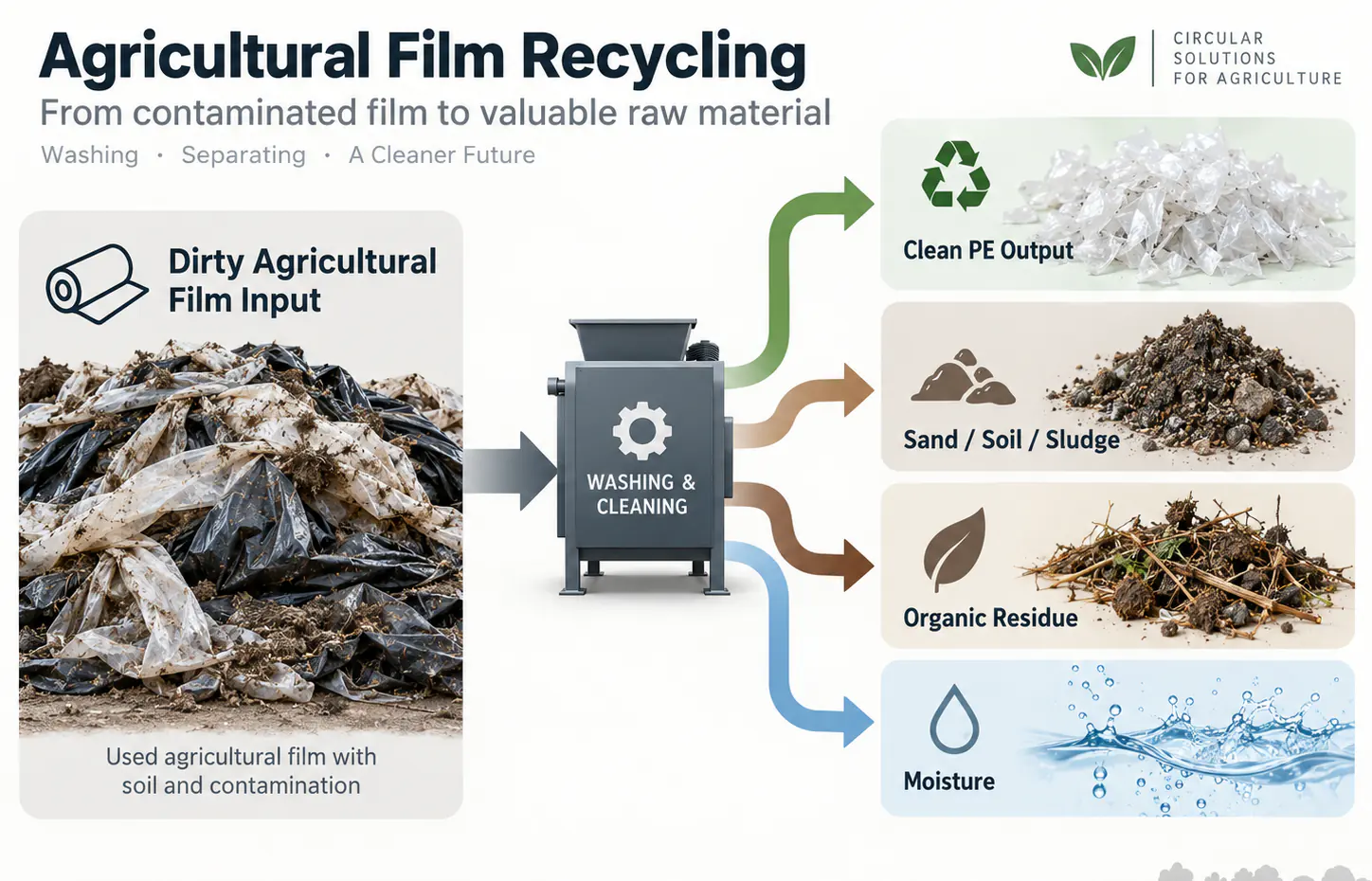
Agricultural film is one of the hardest PE waste streams to wash. The polymer is rarely the problem; everything that comes back from the field with it is: sand, soil, stones, crop residue, silage, moisture, fertilizer residue, ropes and sometimes metal. Heavily used field film can carry almost as much dirt as plastic by weight, and that changes the whole design of the washing line.
The short answer
Agricultural film recycling works when the line is built around the contamination, not just the polymer. Open the bales and remove stones, coarse sand, hard lumps and metal before the expensive machines; scrub fine soil off the film with friction washing; take silt and sludge out of the water circuit instead of recirculating it; then squeeze the film to about 5% moisture (about 2% with a thermal dryer) for stable pelletizing. Size the line on clean output, not dirty bale weight, and test with your own film.
Contents
- 01Agricultural film is not one feedstock
- 02Why sand is more dangerous than ordinary dirt
- 03Do not turn all the sand into slurry too early
- 04Bale opening and controlled feeding
- 05Dry pre-cleaning when the soil is loose
- 06Size reduction: expose the dirt without making fines
- 07Wet size reduction can release a surprising amount of sand
- 08The pre-wash: take out stones, hard lumps and metal first
- 09Coarse grit and fine silt need different solutions
- 10Friction washing removes stubborn soil from the film
- 11Silage and other organic contamination behave differently
- 12Float-sink separation is useful, but it is not a sand washer
- 13Hydrocyclones help with fine heavy particles
- 14The water system decides whether soil leaves or keeps coming back
- 15Sludge handling is part of the line, not an afterthought
- 16Each washing stage should be cleaner than the last
- 17Drying film is different from drying rigid flakes
- 18Bale wrap and stretch film need attention in the dryer
- 19Thin film is easily lost if it is treated too hard
- 20Size the line on clean output, not dirty bale weight
- 21Common agricultural film washing problems
- 22A practical process for heavily contaminated agricultural film
- 23What to send the supplier before asking for a quotation
- 24What to verify during a material trial
- 25Conclusion: remove contamination in the right order
- Frequently asked questions
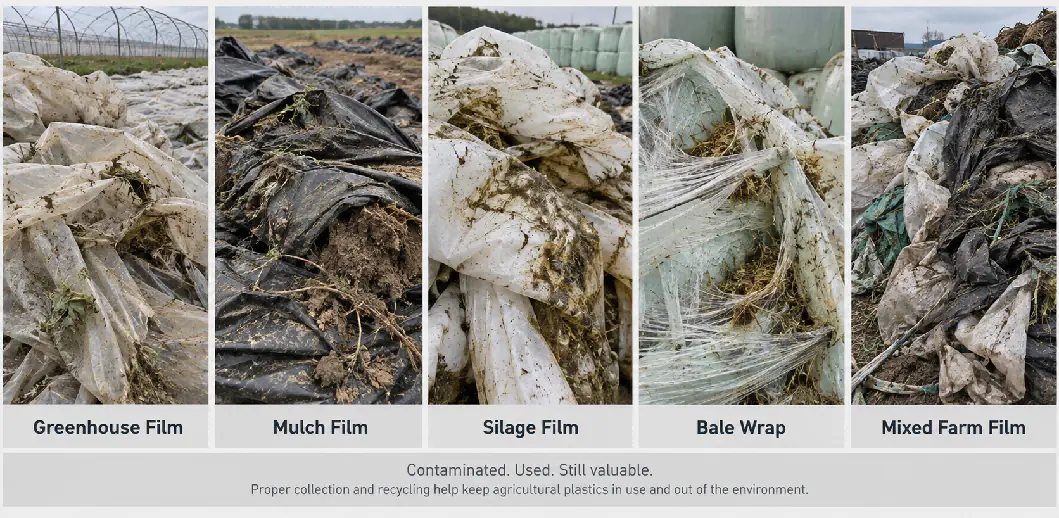
Agricultural film is not one feedstock
Greenhouse film, mulch film, silage film and bale wrap may all be LDPE or LLDPE, but their contamination, thickness, stretch and washing difficulty are very different.
| Film type | Typical condition | Main contamination | Washing difficulty |
|---|---|---|---|
| Greenhouse film | Large, relatively thick sheets; often weathered | Dust, soil, plant residue, clips and ropes | Medium, depending on collection |
| Mulch film | Thin film collected directly from soil | Heavy sand, soil, stones, roots and fine silt | Very high |
| Silage film | Flexible film in contact with feed | Silage residue, moisture, odor, soil | High |
| Bale wrap / stretch film | Highly stretchable LLDPE | Hay, silage residue, dirt and moisture | High; drying is critical |
| Irrigation / mixed farm film | May include mixed plastics and fittings | Soil, metal, rubber, PP parts, other polymers | Application-specific |
So the first question in a farm plastic recycling project is not only ‘what capacity do you need?’ but ‘what type of film is it, and how much non-plastic material is attached to it?’
Why sand is more dangerous than ordinary dirt
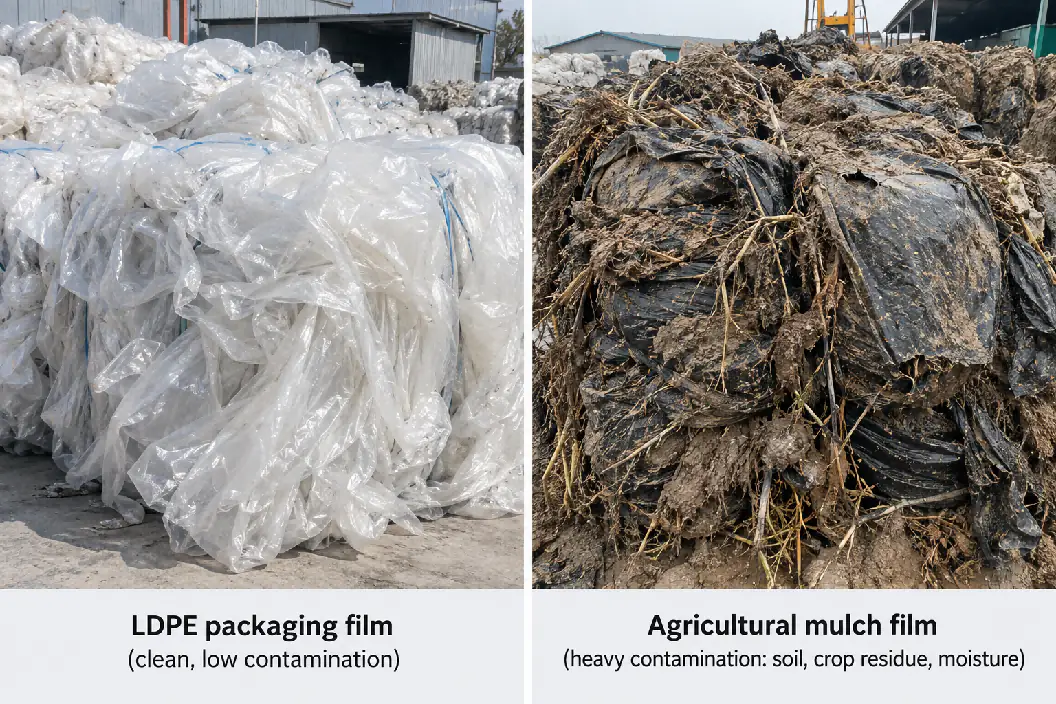
Sand is not only a quality problem. It is an abrasive that travels through the whole line if it is not removed early, wearing shredder and crusher knives, friction-washer rotors, screw conveyors, pump impellers, pipes and dewatering equipment. Fine sand also stays suspended in the process water and circulates through pumps again and again.
That is why a line that runs well on clean packaging film can wear quickly on mulch film. The design should give sand several separate exits: coarse dirt before intensive washing, heavy grit during pre-washing or density separation, and fine solids continuously from the water circuit.
Do not turn all the sand into slurry too early
A common mistake is to send very dirty field film straight into a high-speed wet washer and expect the water system to cope. Once large amounts of soil are mixed into water they become slurry: fine solids spread through tanks, pumps and pipes, settle back on the film and make water treatment much harder.
For very dirty film it is better to remove as much free sand and heavy material as possible first — by controlled bale opening, shaking, screening, a trommel-type pre-cleaner, a pre-wash drum or a heavy-material separator.
Bale opening and controlled feeding
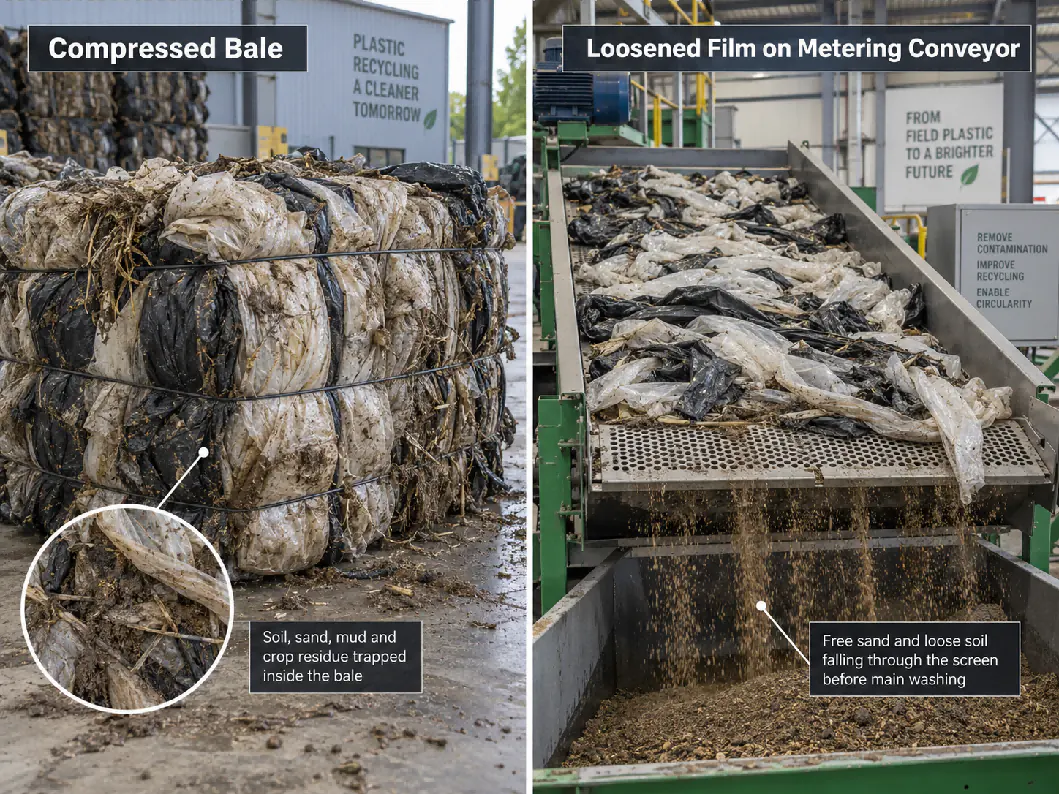
Agricultural film arrives in compressed bales, and the layers trap sand, stones and organic residue. Fed as large bundles, the dirt stays locked between layers and the machines get sudden heavy loads instead of a steady flow.
A bale breaker, loosening conveyor or metered feeder separates the film enough for loose dirt to start falling out. The aim at this point is not clean film; it is an open, even flow and the release of easy contamination before the expensive washing steps.
Dry pre-cleaning when the soil is loose
Dry pre-cleaning removes loose sand, soil clumps and stones before they reach the water loop. It works best when the collected film is dry enough for dirt to fall away: perforated drums, trommel screens and shaking conveyors turn and flex the film while heavy material drops through.
It is less effective when mud is stuck to wet film. Then a wet pre-wash with its own heavy-fraction discharge matters more. Many lines use both: first the easy dry dirt, then water for what is bonded to the film.
Size reduction: expose the dirt without making fines
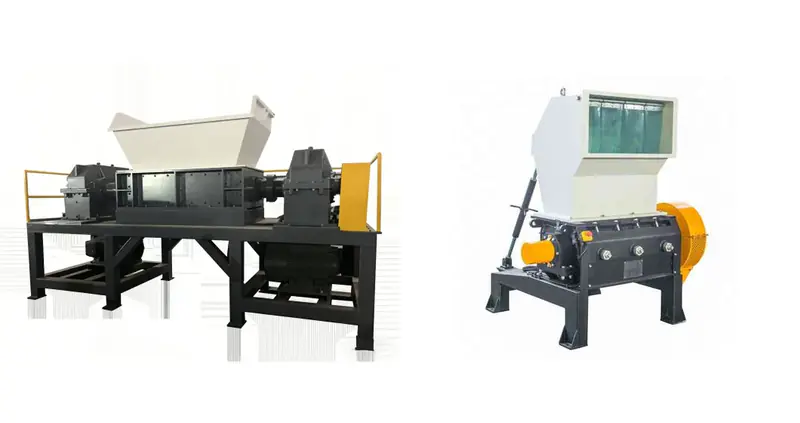
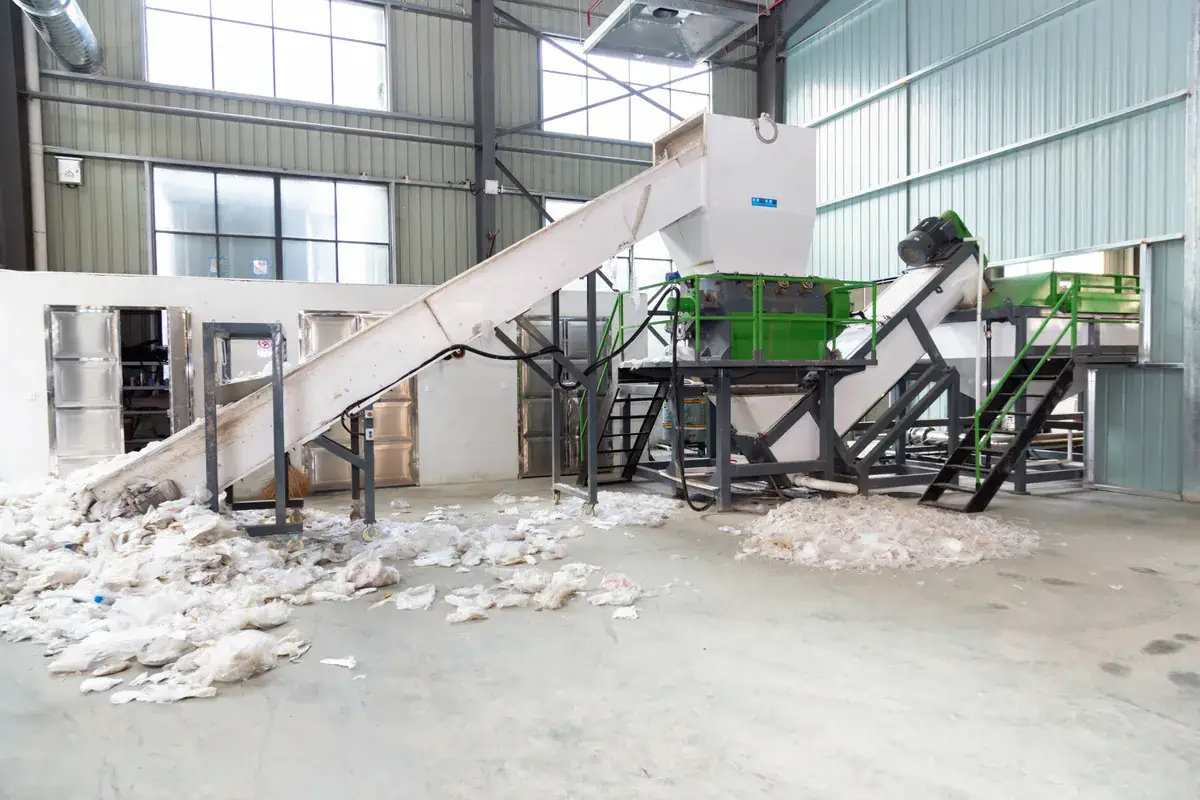
Large agricultural film has to be opened or cut before intensive washing, by a machine that handles flexible material without wrapping and tolerates the remaining dirt. A single-shaft shredder is common for baled film because it gives controlled feeding; wet shredders or wet granulators combine cutting with a first wash. The choice depends on film thickness, bale condition and dirt load — see shredder vs crusher.
The goal is pieces that move freely through the washers and release trapped soil. Grinding field film too fine only creates more fines, more material loss and harder water treatment.
Wet size reduction can release a surprising amount of sand
Adding water during shredding or crushing uses the movement of the material to start washing it: as the film is opened and cut, sand trapped in the folds is released.
This only helps if the released solids leave the circuit. If the dirty water is simply recirculated, the sand stays in the process, so wet size reduction must be integrated with drainage, screening, settling or another heavy-solids exit.
The pre-wash: take out stones, hard lumps and metal first
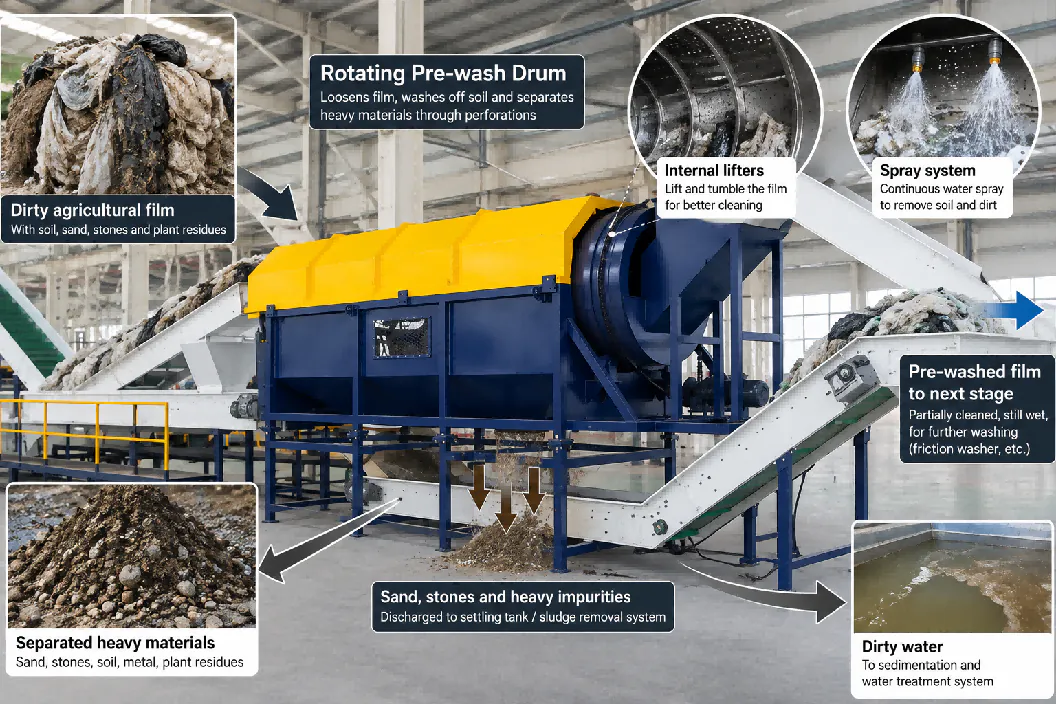
For heavily contaminated mulch and field film, a dedicated pre-wash protects the rest of the plant. Its main job is to screen out stones, hard soil lumps, metal and other heavy foreign bodies before the film reaches the friction washers. A pre-wash drum or heavy-material pre-washer combines wetting, tumbling and gravity separation.
This stage should normally run on its own, dirtier water circuit; there is no benefit in loading the cleaner main-wash water with the first heavy load of soil. The more dirt removed here, the lower the wear and solids load further down the film washing line.
Coarse grit and fine silt need different solutions
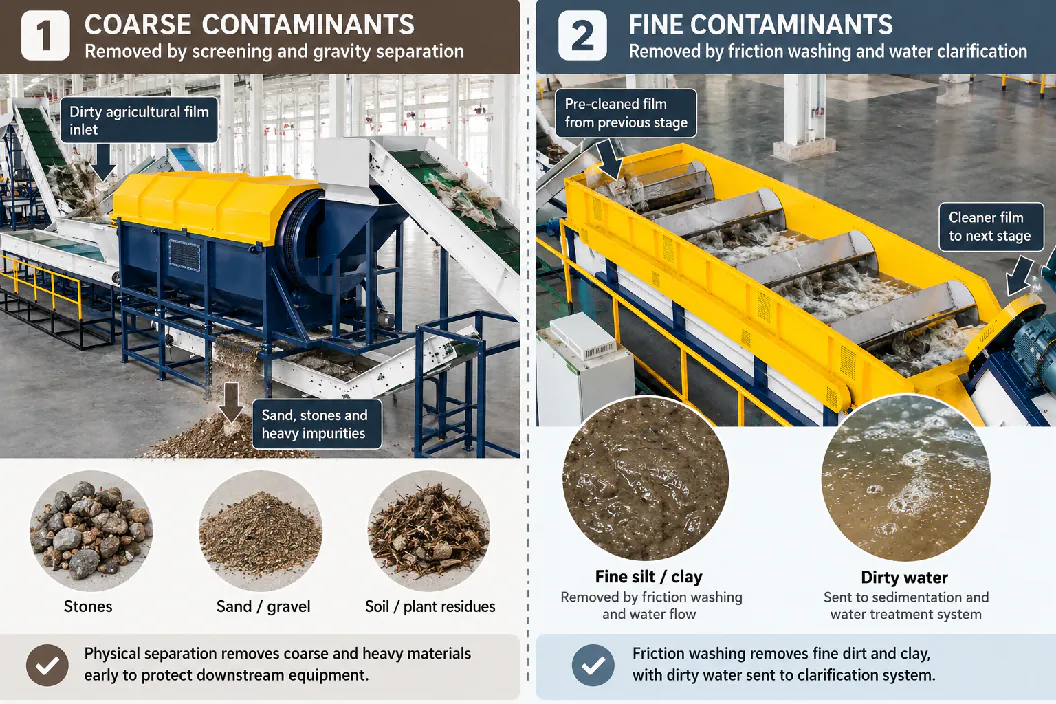
Coarse grit — stones, pebbles, large sand grains, metal and compact soil clumps — is best removed early by screening and gravity or heavy-material separation.
Fine silt — small sand and clay particles — stays attached to the film or circulates in the water. It needs friction washing, enough water exchange and real water treatment. A line that is excellent at removing stones but lets silt circulate will still produce gritty film and wear out pumps.
Friction washing removes stubborn soil from the film
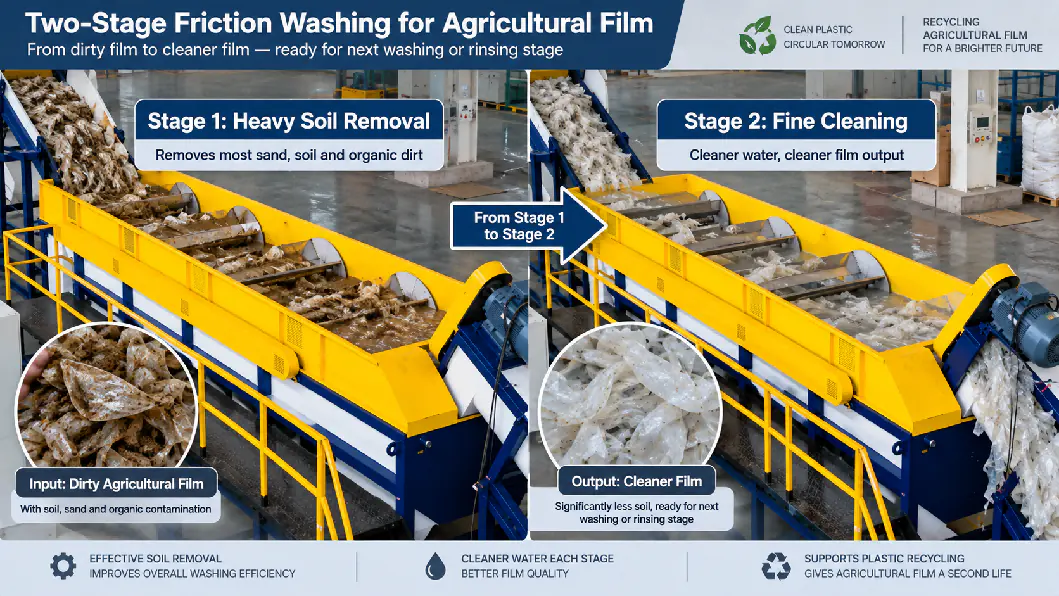
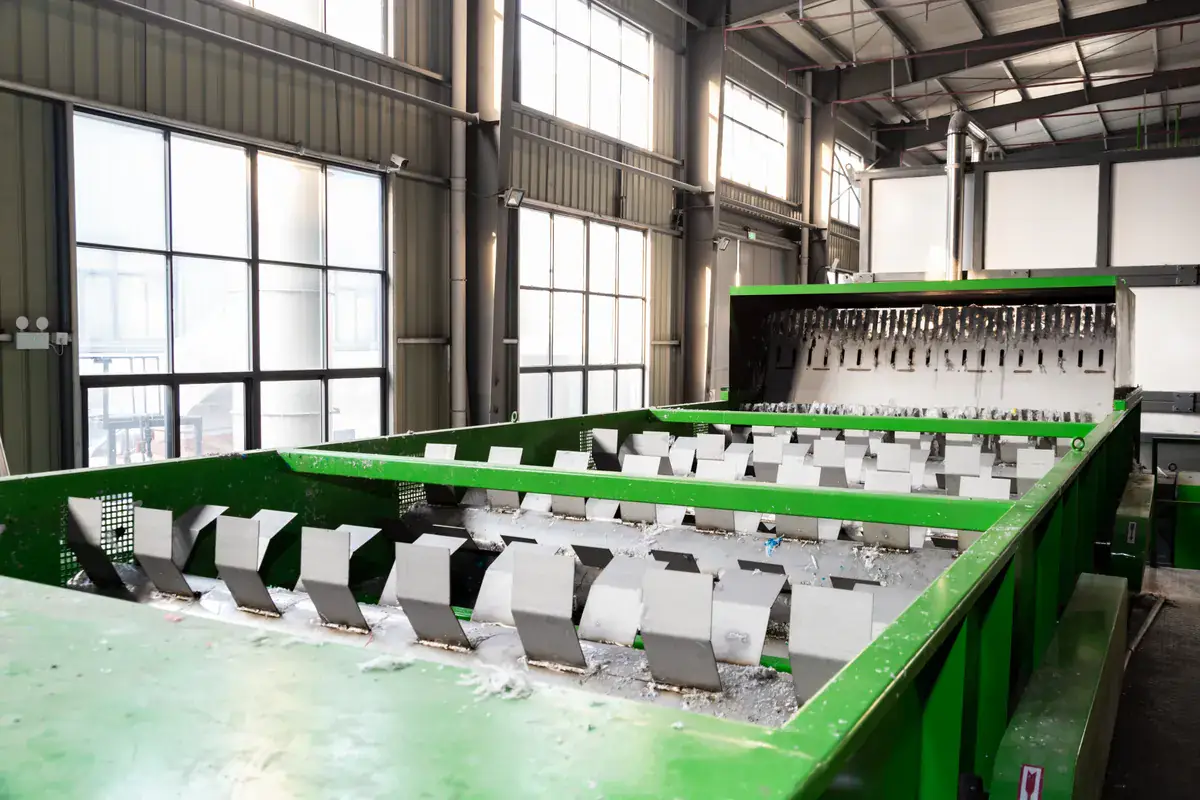
Once most heavy contamination is gone, high-speed friction washing becomes the main cleaning tool. The film is rubbed, squeezed and accelerated against the rotor while water carries away fine soil and loosened organic material — far more effective than soaking film in a tank.
For very dirty film one friction washer is often not enough: the first acts as the dirty scrub, the second as a cleaner polishing wash. Do not overload the washer; packed film does not get enough mechanical contact and the dirt stays trapped.
Silage and other organic contamination behave differently
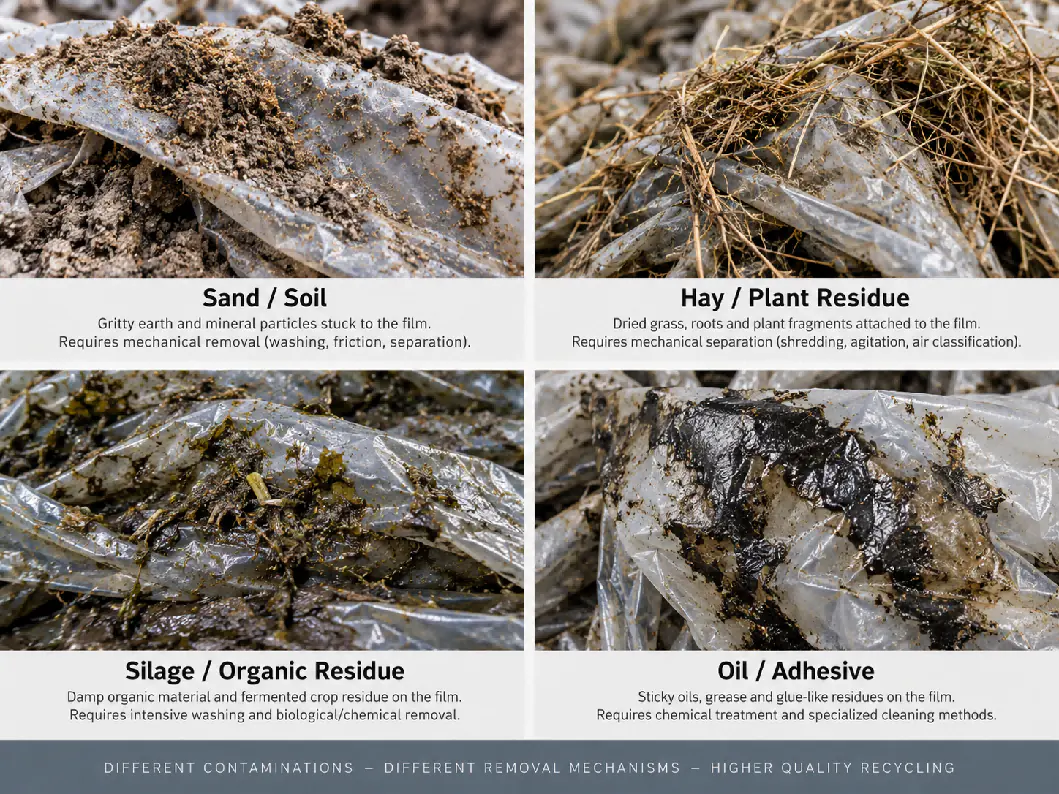
Silage residue, hay and leaves are lighter and softer than sand. They float, break into fibers or partly dissolve, which loads screens and water treatment and causes strong odor if the water is not refreshed or treated. This is why silage wrap recycling needs more water management than greenhouse film.
Mechanical friction removes most attached organic residue. A chemical or hot wash should be added only when oil, adhesive or stubborn residue remains and the final pellet specification requires it, because it raises energy, chemical and wastewater costs.
Float-sink separation is useful, but it is not a sand washer
LDPE and LLDPE film float while stones, sand, metal and many heavier materials sink, so a float-sink tank removes heavy contaminants. But it cannot accept unlimited sand: too much soil builds up sediment, turns the water muddy and overloads the heavy-fraction discharge. Most bulk sand should already be gone; the tank is another barrier, not the first line of defense.
Where the tank goes depends on the film. With stone-heavy film it can sit before the friction washers, right after the pre-wash, so stones and hard lumps never reach the high-speed rotors. With cleaner film it can follow the first friction wash. Both layouts work; the material decides.
PP and PE are both lighter than water, so a standard water float-sink tank cannot separate them from each other.
Hydrocyclones help with fine heavy particles
Some advanced film lines use a hydrocyclone or centrifugal density separator after pre-washing. High water volume and centrifugal force improve the separation of fine heavy particles and heavier plastics from the floating polyolefin stream, which is useful when agricultural and post-consumer film are mixed.
A hydrocyclone is not a substitute for early grit removal. Feeding it stones and coarse sand only moves the wear problem downstream.
The water system decides whether soil leaves or keeps coming back
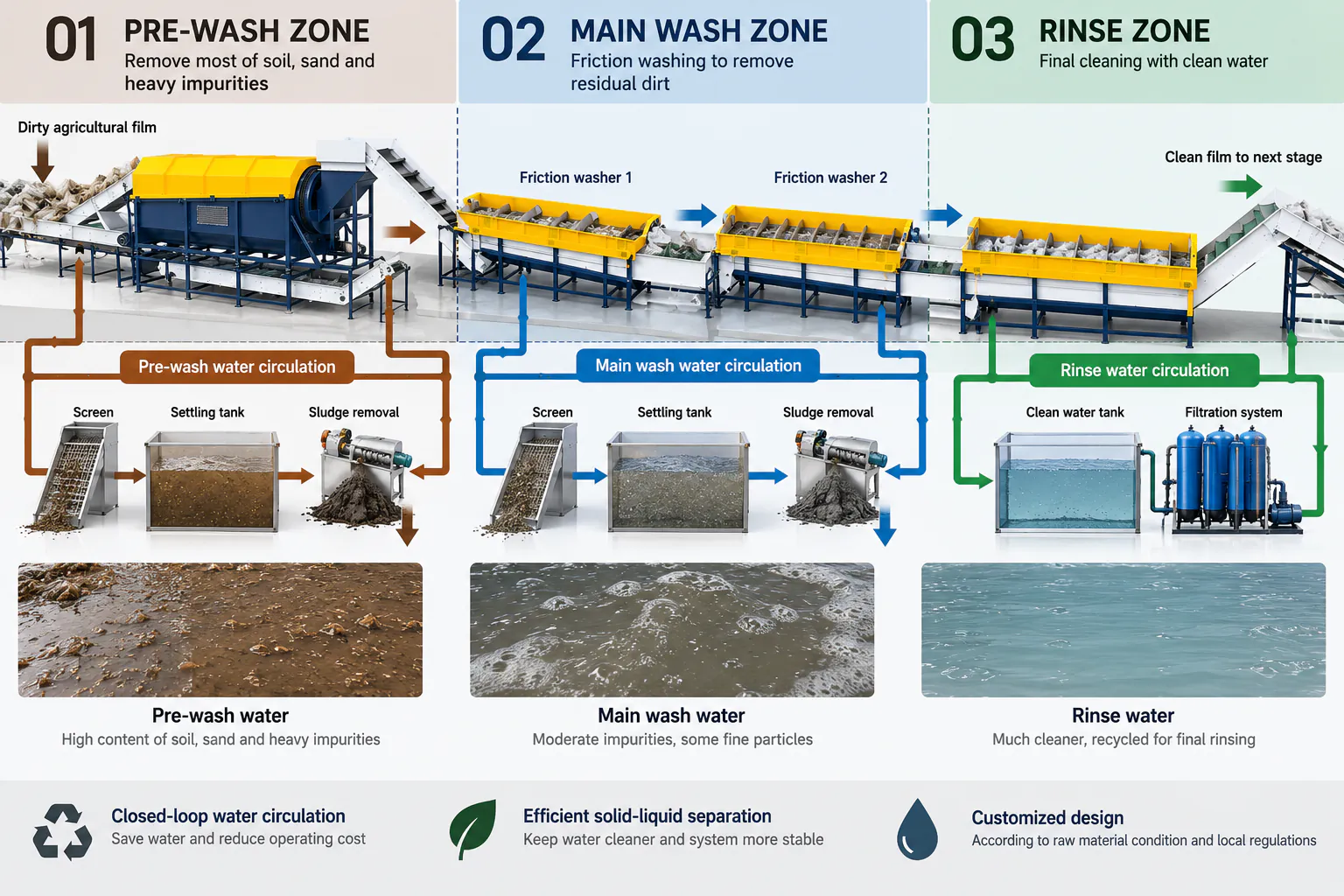
Once fine soil is in the water, the line needs a deliberate solids strategy. Dirty water should pass through screening and settling or clarification before reuse, and the sludge must physically leave the circuit; otherwise the plant only moves soil from one tank to the next.
Many agricultural film plants split the water into zones — a very dirty pre-wash loop, a main wash loop and a cleaner final-rinse loop — so the first heavy load never reaches the cleanest stages. Fresh water is best spent toward the final stages, where it improves quality most.
Sludge handling is part of the line, not an afterthought
A line washing field film can remove a large mass of soil every hour, and all of it ends up as sediment or sludge. Settling tanks must be easy to clean or have continuous sludge discharge, and pumps and pipes must avoid dead zones where solids collect.
If sludge removal is undersized, water quality drops through the shift even when the line looks good at start-up. When you evaluate a line, ask where every kilogram of sand and soil is expected to leave the process.
Each washing stage should be cleaner than the last
The first stages should remove bulk dirt aggressively, the middle stages should scrub off fine soil, and the last stages should rinse with cleaner water so that dirt is not redeposited before drying. Progressive cleaning is more efficient than asking one machine to do everything.
Drying film is different from drying rigid flakes
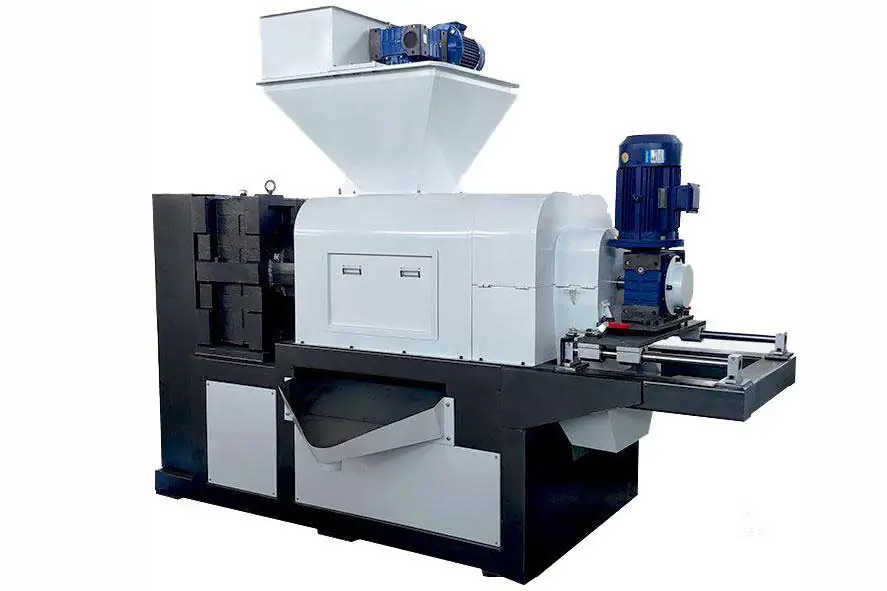
Washed film has a low bulk density and holds a lot of water between folds, so it is much harder to dry than rigid PP or HDPE flakes. Centrifugal dewatering removes free water but leaves thin film wet and bulky.
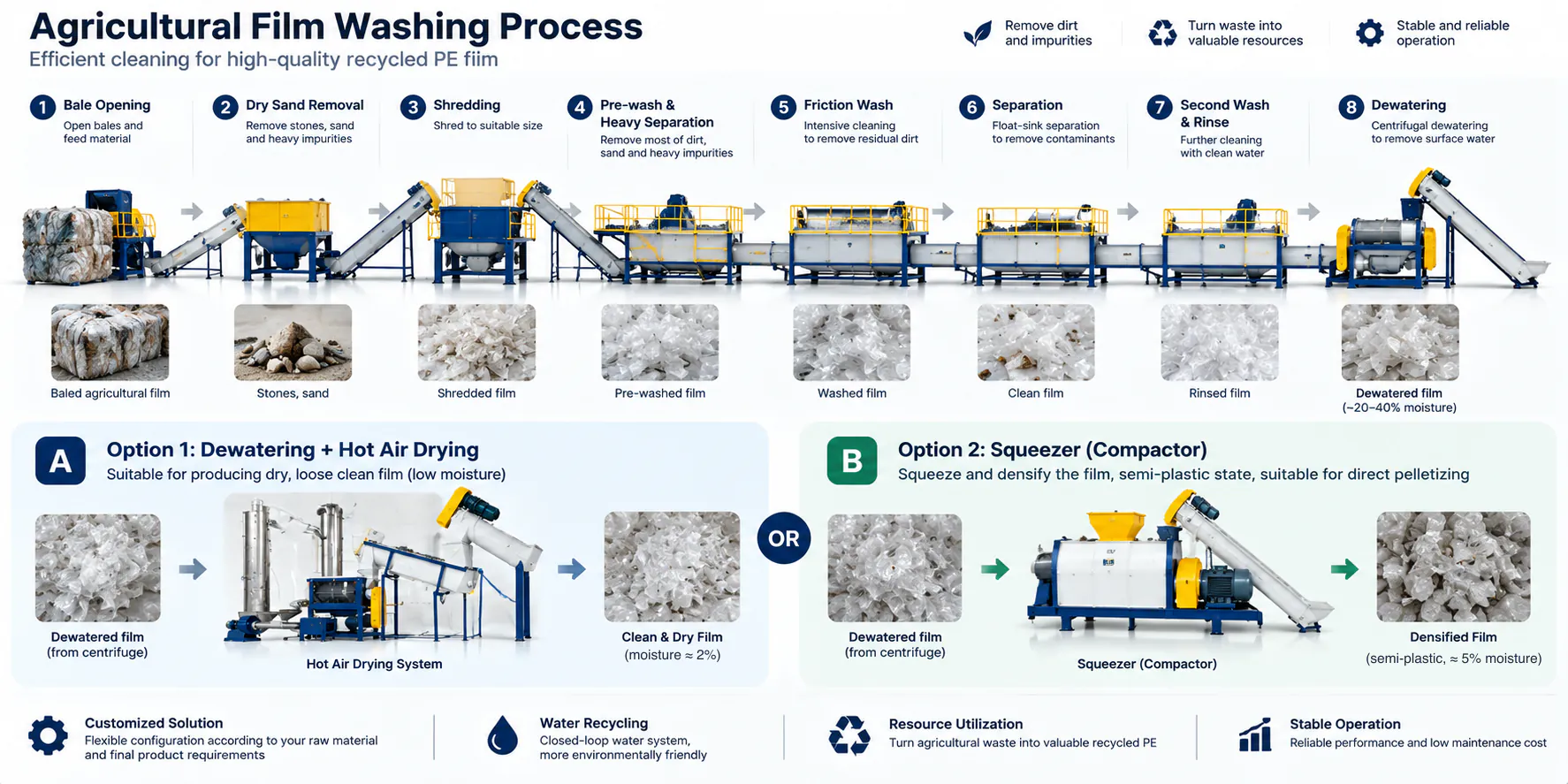
That is why film lines use a squeezing dryer. It compresses and heats the washed film, removes most of the remaining water and densifies it so it feeds well into a film pelletizing line. In our lines the squeezer brings film to about 5% moisture; where the extruder needs drier feed, a thermal dryer takes it to about 2%.
Bale wrap and stretch film need attention in the dryer
LLDPE stretch film is far more elastic than greenhouse film and tends to form wet bundles. A drying section designed only around thicker film can let stretch film through too wet or feed unevenly.
Tell the supplier roughly how much stretch film, silage wrap and thin mulch film you will process before the dryer and squeezer are selected.
Thin film is easily lost if it is treated too hard
Mulch film is already thin and degraded after a season in the field. Excessive shredding, very small screens and aggressive high-speed treatment create fine film pieces that leave with the wastewater and sludge.
A good line balances cleaning intensity against yield. Measure recovery during trials by comparing the dry polymer content of the input with the usable washed output — not the dirty input weight with the final product.
Size the line on clean output, not dirty bale weight
A dirty bale can contain a large mass of soil and water, so agricultural film capacity figures are easily misleading. If your bales are 30–40% soil, a line taking 1,000 kg/h of dirty input may deliver only about 600–700 kg/h of washed film. A supplier quoting 1,000 kg/h of clean output must design the front end for much more incoming mass.
Every quotation should state whether capacity means dirty input, dry polymer content or clean washed-film output.
Common agricultural film washing problems
| Problem | Likely cause | What to check |
|---|---|---|
| Rapid knife or rotor wear | Too much sand and stone reaching size reduction | Pre-cleaning, heavy-material separator, stone and metal removal |
| Wash tanks turn into mud tanks | Bulk soil not removed early; water loop overloaded | Pre-wash discharge, settling, water exchange |
| Film still gritty after washing | Fine silt recirculating | Friction washing, water clarity, fine-solids removal |
| High sludge volume | Very dirty feed or too many polymer fines | Feed contamination, shred size, screen size, material loss |
| Strong odor remains | Organic or silage residue | Friction intensity, water refresh, optional hot wash |
| Pump wear, loss of pressure | Abrasive solids circulating | Settling, filters, pump inspection |
| High final moisture | Squeezer or dryer undersized; high stretch-film share | Dewatering load, squeezer, thermal drying |
| Pelletizer filter blocks quickly | Residual soil, organics or fines | Final rinse quality, drying, melt filtration |
A practical process for heavily contaminated agricultural film
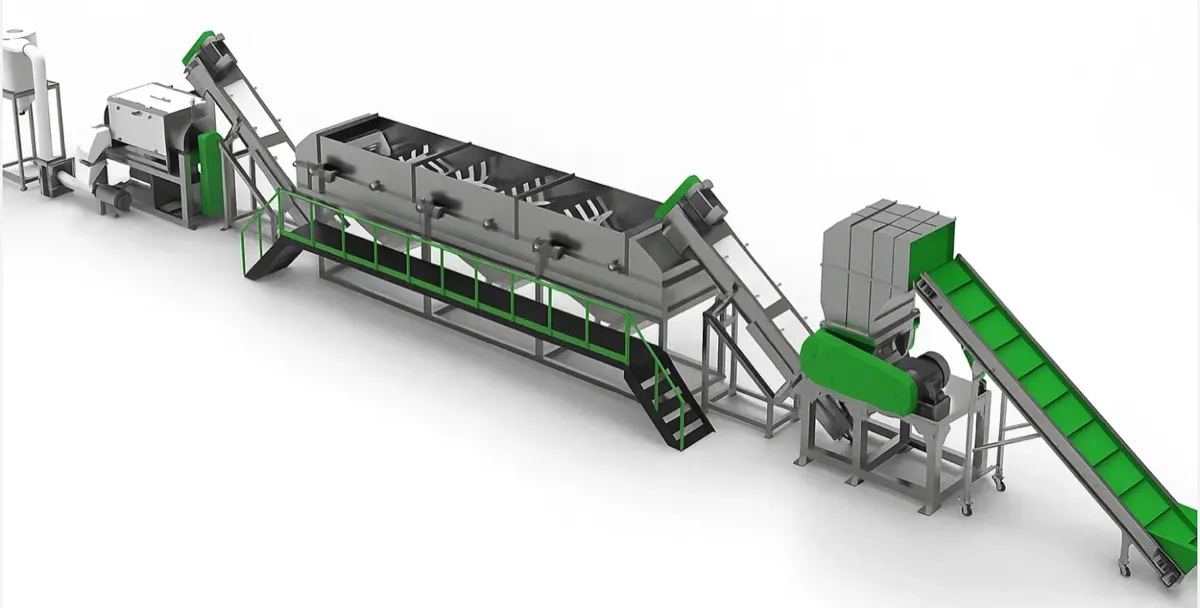
For difficult mulch film or mixed farm film, a practical sequence is:
- Bale opening and metered feeding
- Dry screening: stones and coarse sand
- Shredding or opening
- Wet pre-wash with heavy-material discharge
- First friction wash
- Float-sink or centrifugal separation
- Second friction wash
- Optional hot wash
- Clean-water rinse
- Centrifugal dewatering
- Squeezing to about 5% moisture
- Thermal drying to about 2% if required
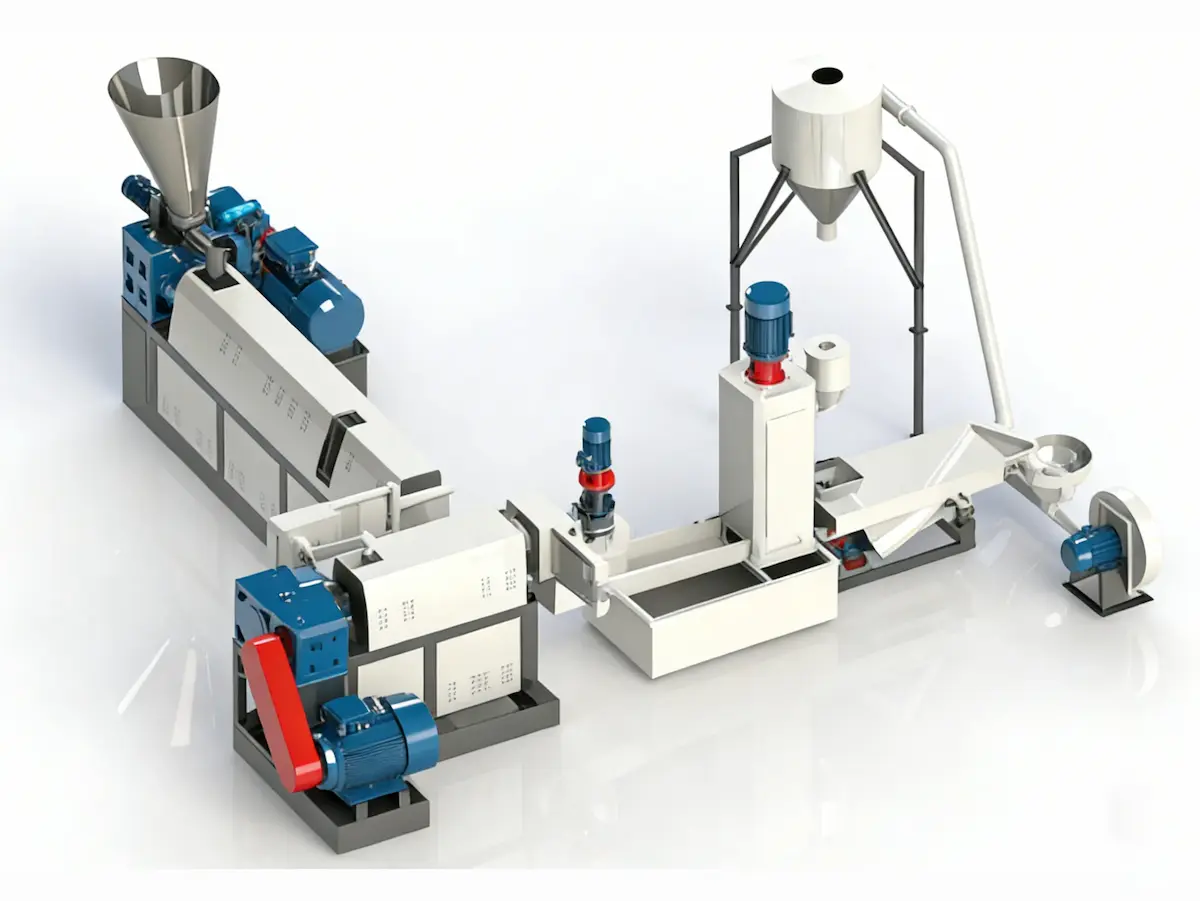
- Buffer storage and feeding to pelletizing
Adapt the order to the feedstock: cleaner greenhouse film may not need every stage, while thin mulch film full of soil needs stronger pre-cleaning and solids handling. You can see a line running in our agricultural film washing line video.
What to send the supplier before asking for a quotation
- Film type: mulch, greenhouse, silage, bale wrap or mixed farm film.
- Polymer: LDPE, LLDPE, PP or mixed.
- Typical film thickness, if known.
- Photos of several complete bales and loose film samples.
- Estimated soil and sand content.
- Whether the dirt is dry sand, wet mud, stones, hay, silage or other organic residue.
- Ropes, metal clips, irrigation parts or other non-film items.
- Required clean-film output capacity.
- Final product: washed film, squeezed material or pellets.
- Target moisture before pelletizing.
- Available fresh water and water treatment.
- Daily operating hours and the degree of automation you want.
For agricultural film a material trial is especially valuable — send us your film details and we can test it.
What to verify during a material trial
- How much free sand falls out before wet washing.
- Whether stones and heavy material leave before the main wash.
- How quickly the wash water turns muddy.
- Whether fine soil remains on the film after friction washing.
- How much film is lost with screens and sludge.
- The condition of pumps, knives and wear surfaces after the test.
- Moisture after centrifugal drying and after squeezing.
- Bulk density and feeding behavior of the dried or squeezed film.
- Pelletizer filter pressure, if the trial continues to extrusion.
A short, clean-looking sample is not enough. The line must stay stable with continuous dirty feed once the water system has reached its normal dirt load.
Conclusion: remove contamination in the right order
Agricultural film can be recycled successfully, but the line must be designed around contamination rather than polymer alone. Stones and coarse sand leave first; fine soil is scrubbed off and taken out of the water circuit; organic residue is washed out without turning the water into a recirculating contamination source; and the film is dewatered and densified for stable pelletizing.
For the dirtiest film, the most important equipment is often not the final washer or dryer but the early pre-cleaning and pre-wash that stop abrasive dirt reaching every machine downstream. When you compare agricultural film washing lines, ask where the sand leaves, how sludge is removed, how film loss is controlled and what clean output is guaranteed from your own material.
Frequently asked questions
Why is agricultural film so hard to recycle?
Because of what comes with it. Mulch and field film can carry almost as much sand, soil, stones and crop residue as plastic by weight. Sand wears knives, rotors and pumps, fine silt circulates in the water and organic residue causes odor, so the line must remove dirt in stages before the film can be pelletized.
How do you remove sand from agricultural film?
In stages: open the bales and screen out loose sand and stones dry, use a pre-wash to discharge stones, hard lumps and metal, scrub fine soil off with friction washers, and remove silt from the water by settling and sludge discharge so it is not recirculated.
Where should the float-sink tank go in an agricultural film line?
It depends on the film. With stone-heavy film it can sit right after the pre-wash, before the friction washers, to protect the rotors. With cleaner film it can follow the first friction wash. In both cases most of the bulk sand should already be gone.
How dry is agricultural film after washing?
A squeezing dryer brings washed film to about 5% moisture and densifies it for pelletizing. If the extruder needs drier feed, a thermal dryer takes it to about 2%.
Can silage wrap and bale wrap be recycled?
Yes, but they need attention. Silage residue loads the water and causes odor, and stretchy LLDPE wrap forms wet bundles, so the friction washing, water refresh and drying section must be sized for the share of wrap in your feed.
How should capacity be specified for an agricultural film washing line?
On clean output. If bales are 30–40% soil, 1,000 kg/h of dirty input may give only about 600–700 kg/h of washed film. A quotation should say whether capacity means dirty input, dry polymer or clean washed film.
Agricultural film trial
How dirty is your film, and what will it really yield?
Send photos of your bales and loose film. Our engineers will propose the pre-cleaning, washing, water and drying setup and can test your material to measure sand removal, film loss and clean output.
Request a trial- Film type and polymer
- Bale photos and soil content
- Required clean output in kg/h
- Final product: washed film or pellets