Plastic Shredder vs Crusher (Granulator): What Is the Difference?
Shredders and crushers both reduce the size of plastic waste, but they do not do the same job. Choosing the wrong machine can cause low output, frequent jams, excessive blade wear, unstable feeding or an unnecessary increase in investment and power consumption. The right choice depends on the size and shape of the waste, its thickness and toughness, how it is fed, and the particle size required by the next recycling stage.
The short answer
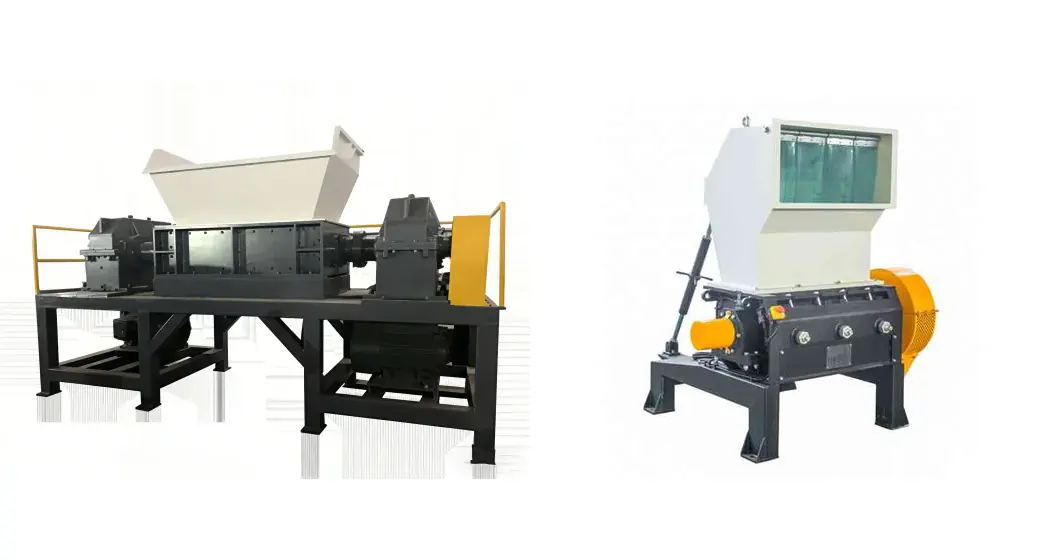
If the main problem is that the waste is too large, bulky or difficult to feed, start with a shredder. If the main requirement is a smaller and more uniform flake size, use a crusher. If both problems exist, a shredder followed by a crusher is usually the more stable solution.
Contents
- 01The simplest way to understand the difference
- 02What a plastic shredder is designed to do
- 03What a plastic crusher is designed to do
- 04Shredder vs crusher: the decision starts with the raw material
- 05When one crusher is enough
- 06When a shredder and crusher should be used together
- 07Why “motor power” is not enough to compare machines
- 08The target output size changes the machine choice
- 09Film and woven bags require special attention
- 10How contamination affects shredder and crusher selection
- 11What information should you provide before asking for a quotation?
- 12Final selection: choose the process, not just the machine
- Frequently asked questions
The simplest way to understand the difference
In many recycling plants, size reduction is not a single-machine decision. Large or bulky products may first be shredded into manageable pieces and then crushed to a controlled size. Bottles and smaller rigid scrap, on the other hand, can often go directly to a crusher without a shredder.
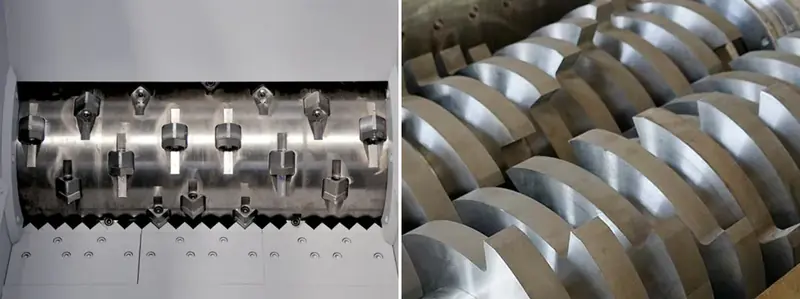
A plastic shredder is mainly used for primary size reduction. It works at relatively low rotor speed and high torque, allowing it to bite into bulky, thick, irregular or difficult-to-feed waste. Its main task is to make large plastic products smaller and easier to handle.
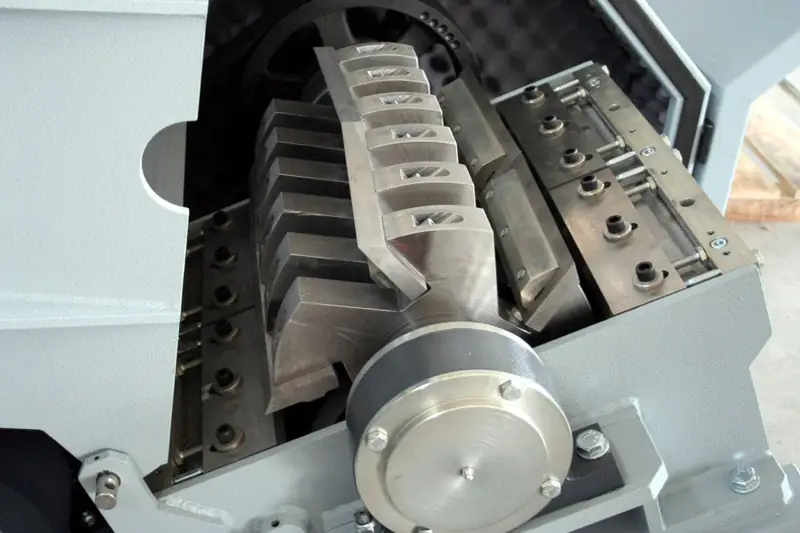
A plastic crusher is mainly used for secondary or controlled size reduction. It normally runs at a higher rotor speed, uses rotating knives against fixed knives, and discharges material through a screen. The screen determines the maximum particle size leaving the cutting chamber.
When selecting a crusher, compare the cutting chamber width, rotor diameter and speed, moving- and fixed-knife arrangement, screen size, motor power, feeding method and intended material. These factors determine whether the machine can accept the feed continuously and produce the required flake size at a stable throughput.
What a plastic shredder is designed to do
A shredder is designed for materials that are too large, too bulky or too difficult to feed directly into a high-speed crusher. Typical examples include plastic pallets, large bins, thick lumps, drums, pipe sections, film bales and woven bag bundles.
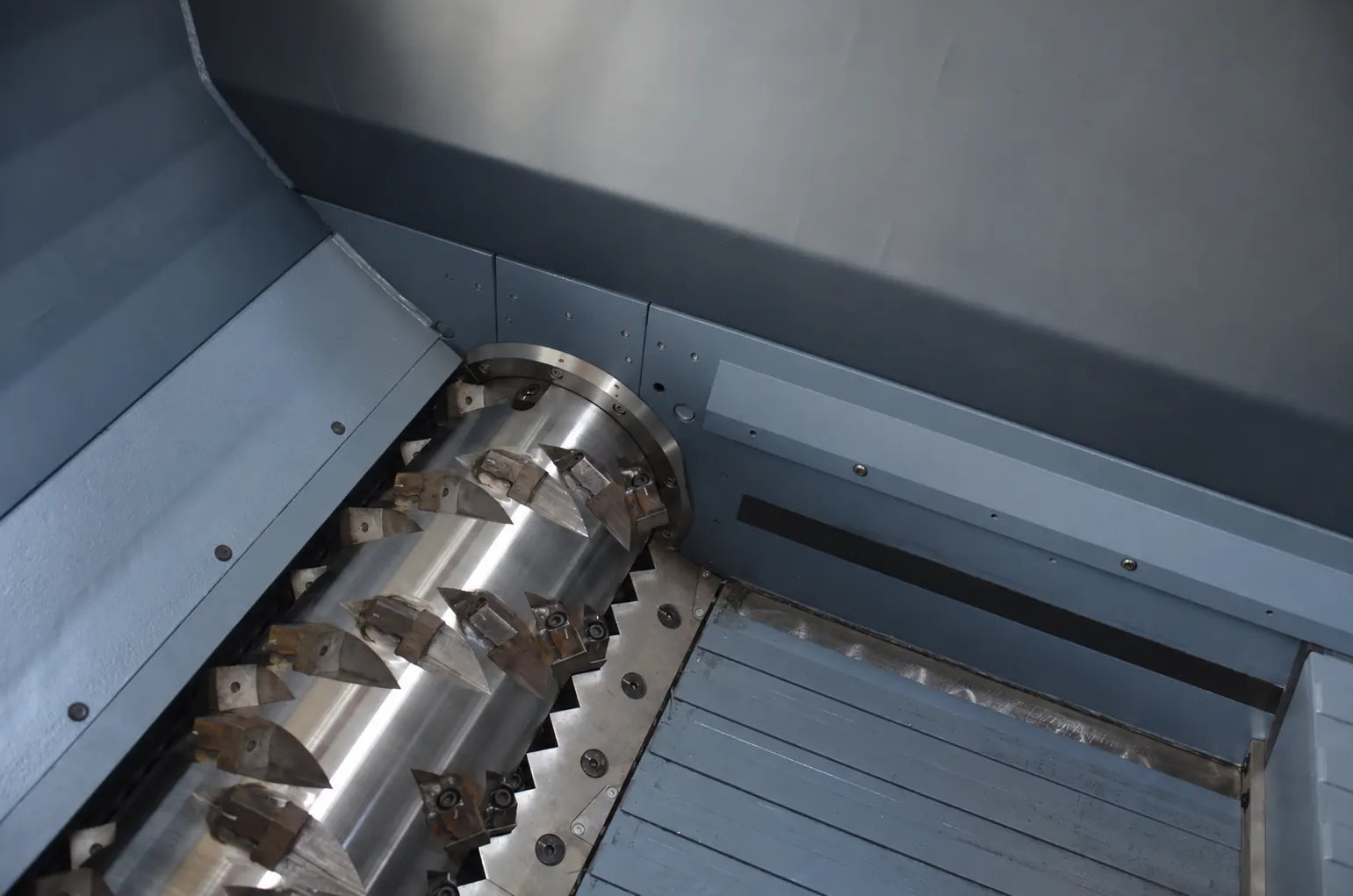
A single-shaft shredder usually has a slow-speed rotor equipped with square or replaceable knives. A hydraulic pusher continuously pushes the waste toward the rotor. After the material is cut, it passes through a screen under the rotor. This makes the discharge size more controlled than with many double-shaft shredders.
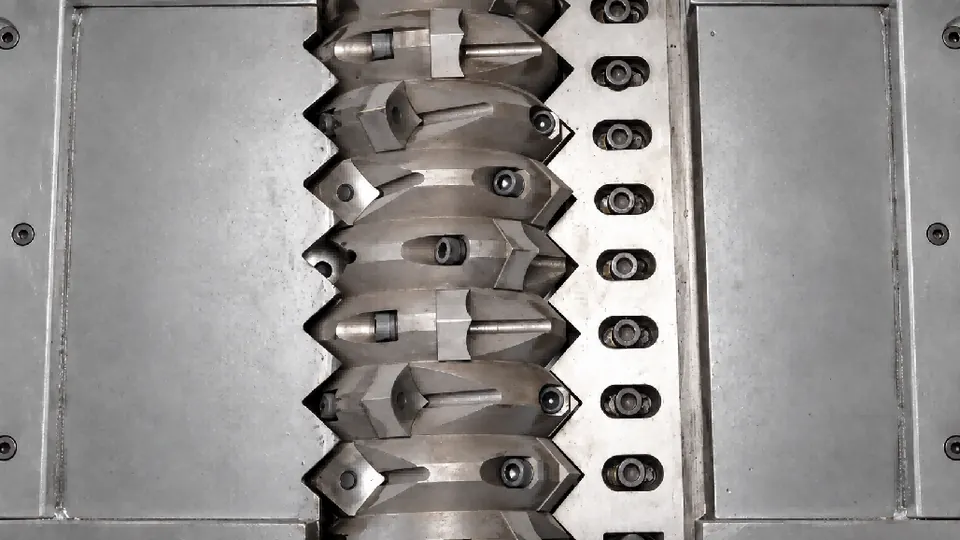
The main advantages of using a shredder are:
- Large feeding opening for bulky or irregular waste.
- High torque and strong biting ability at low rotor speed.
- Lower risk of material bouncing out of the chamber compared with a high-speed crusher.
- Better feeding control for film, raffia, lumps, pallets and large molded products.
- Suitable as the first stage before washing, crushing or pelletizing.
The main limitation is that a shredder is usually not the best choice when a small, very uniform final particle size is required. A shredder can reduce the material enough for the next process, but the final flakes may still be too large for efficient washing, drying, pneumatic conveying or direct extrusion. In those cases, a crusher is added downstream.
What a plastic crusher is designed to do
In plastic recycling, ‘crusher’, ‘granulator’ and ‘grinder’ usually describe the same machine: a fast rotor with knives cutting against fixed bed knives above a sizing screen. European and North American suppliers more often say granulator; many Asian suppliers say crusher. What matters is the rotor design, screen size and feed preparation, not the name.
A plastic crusher uses a higher-speed rotor with moving knives that cut against fixed knives. Material remains in the cutting chamber until it is small enough to pass through the screen. This makes the machine suitable when a more consistent flake size is required.
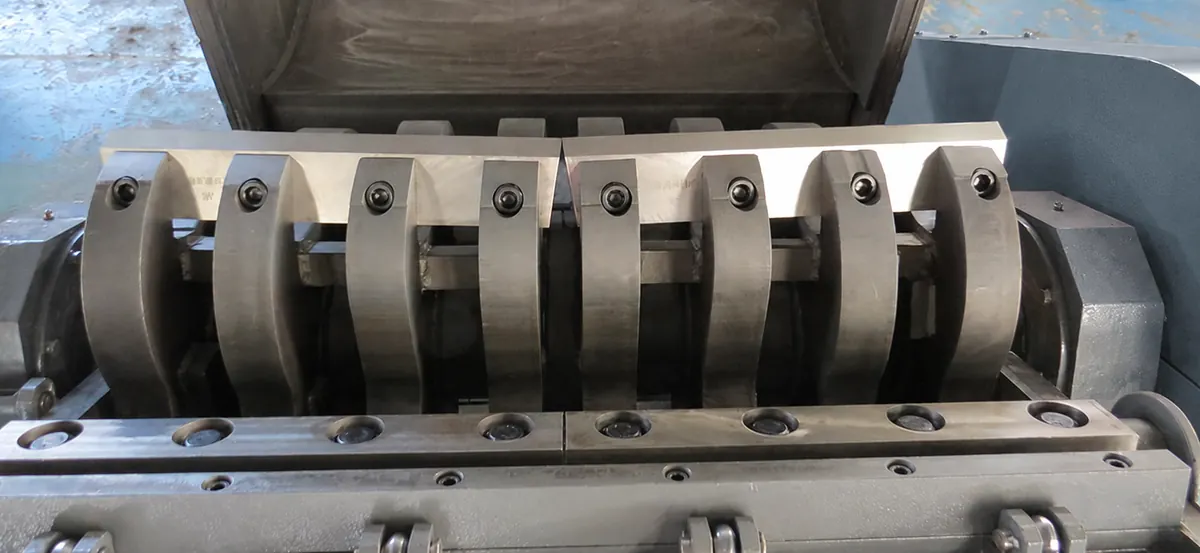
Typical applications include PET bottles, HDPE detergent bottles, PP household containers, injection molding runners, smaller rigid plastic scrap and material that has already been pre-shredded.
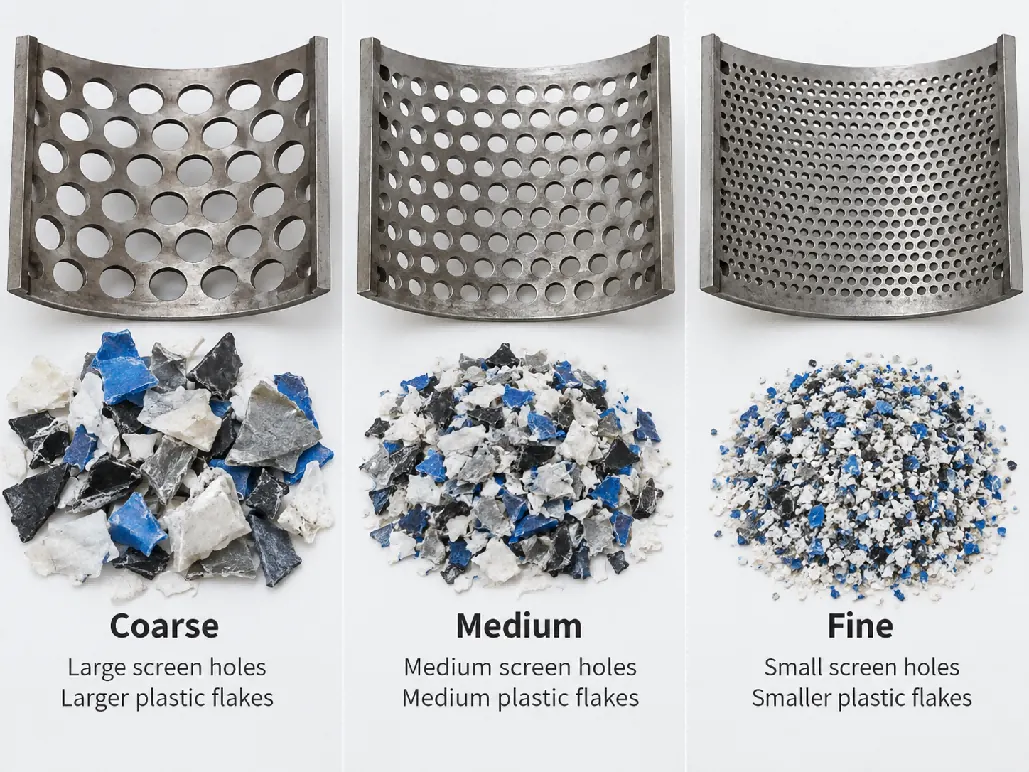
The screen is one of the most important differences between crushing applications. A smaller screen opening produces smaller flakes, but it also increases residence time inside the chamber. That normally means lower throughput, higher specific energy consumption and faster blade wear. For this reason, screen size should be selected according to the next process rather than simply choosing the smallest opening available.
Shredder vs crusher: the decision starts with the raw material
The most practical way to select equipment is to look at the actual waste rather than the requested capacity alone. Two customers may both ask for 1,000 kg/h, but the correct machine can be completely different if one customer processes PET bottles and the other processes 1.2-meter plastic bins.
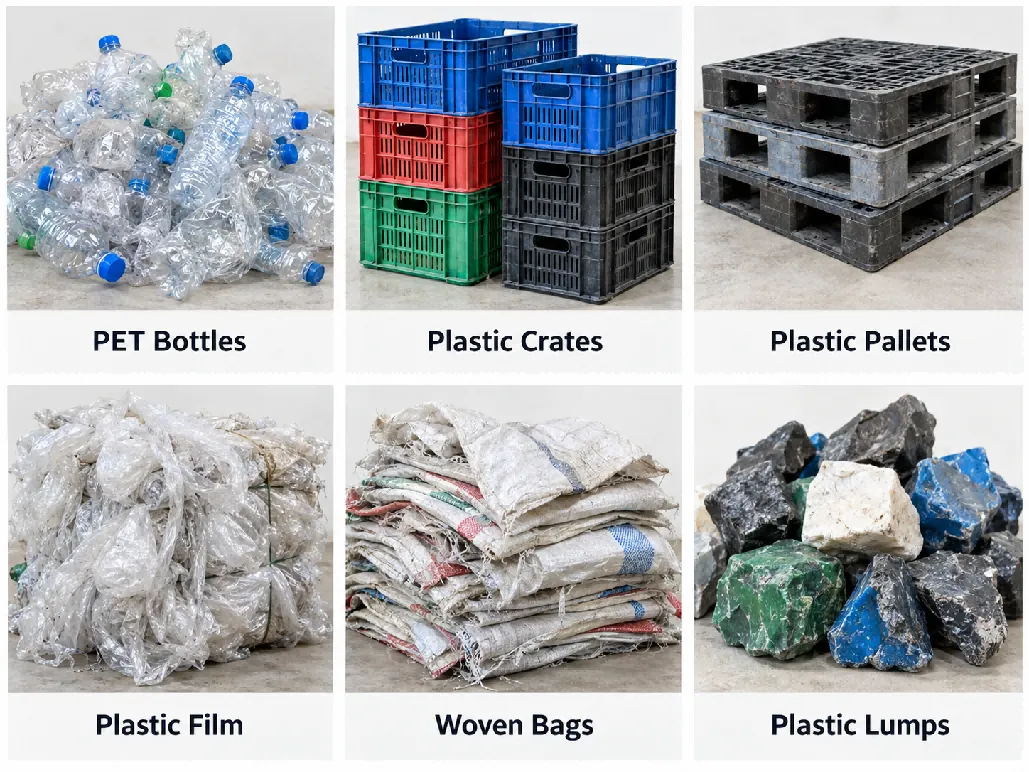
| Waste material | Typical choice | Why |
|---|---|---|
| PET beverage bottles | Crusher | Bottles are light and relatively easy to cut. A shredder is usually unnecessary unless bottles are highly compacted or mixed with bulky waste. |
| HDPE detergent or milk bottles | Crusher | Usually suitable for direct crushing before washing and float-sink separation. |
| Plastic crates and bins | Shredder + crusher | Large dimensions and thick ribs make direct feeding difficult. Shredding first stabilizes feeding; crushing controls final size. |
| Plastic pallets | Shredder + crusher | Bulky structure and thick sections require high torque before fine size reduction. |
| Large drums and containers | Shredder + crusher | Primary shredding prevents bridging and reduces impact loading on the crusher. |
| LDPE / LLDPE film | Single-shaft shredder, sometimes wet crusher later | Film is light, elastic and prone to wrapping. Feeding method is often more important than motor power. |
| PP woven bags / raffia | Single-shaft shredder or dedicated crusher | Loose bags may be processed differently from tightly baled or heavily contaminated woven sacks. |
| Plastic lumps and purge | Heavy-duty shredder + crusher if fine output is needed | Dense lumps create high shock loads; primary shredding protects downstream equipment. |
| Large-diameter plastic pipe | Pipe shredder / single-shaft shredder, then crusher if required | Pipe diameter and wall thickness determine whether direct crushing is practical. |
When one crusher is enough
A shredder should not be added simply because it looks more heavy-duty. If the material can be fed safely and continuously into a crusher and the crusher can achieve the required throughput and flake size, adding a shredder increases investment, footprint, power consumption and maintenance without creating much value.
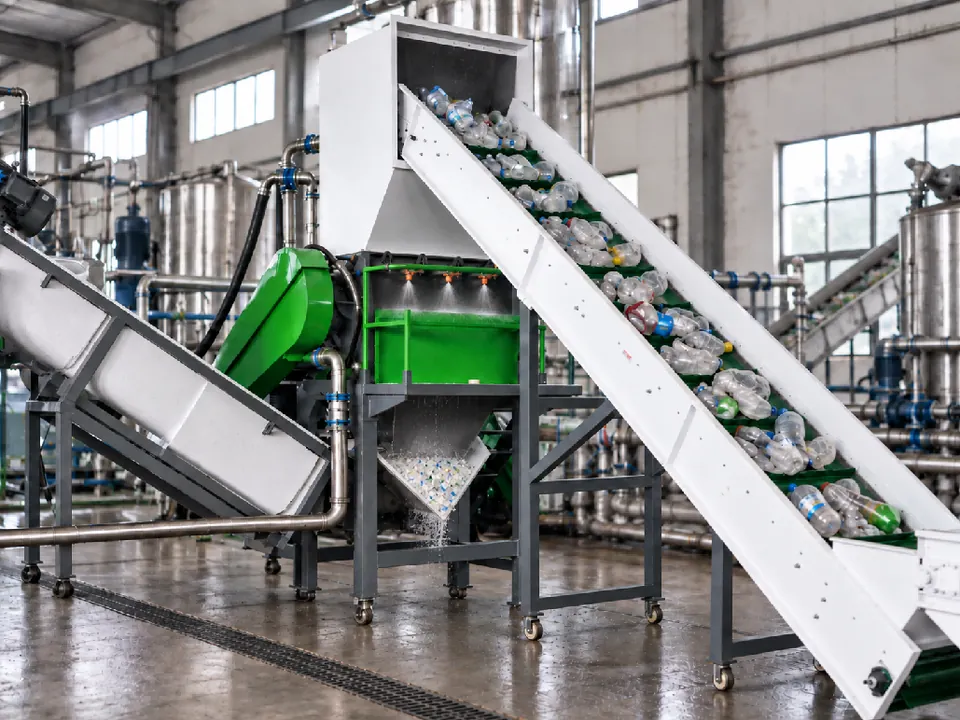
Direct crushing is common for PET bottles, HDPE bottles, smaller containers, injection molding scrap and many rigid plastics with manageable dimensions. In a bottle washing line, for example, the crusher can be installed after sorting and label removal. Wet crushing can also be used so that water starts removing dirt and reduces frictional heat during size reduction.
When a shredder and crusher should be used together
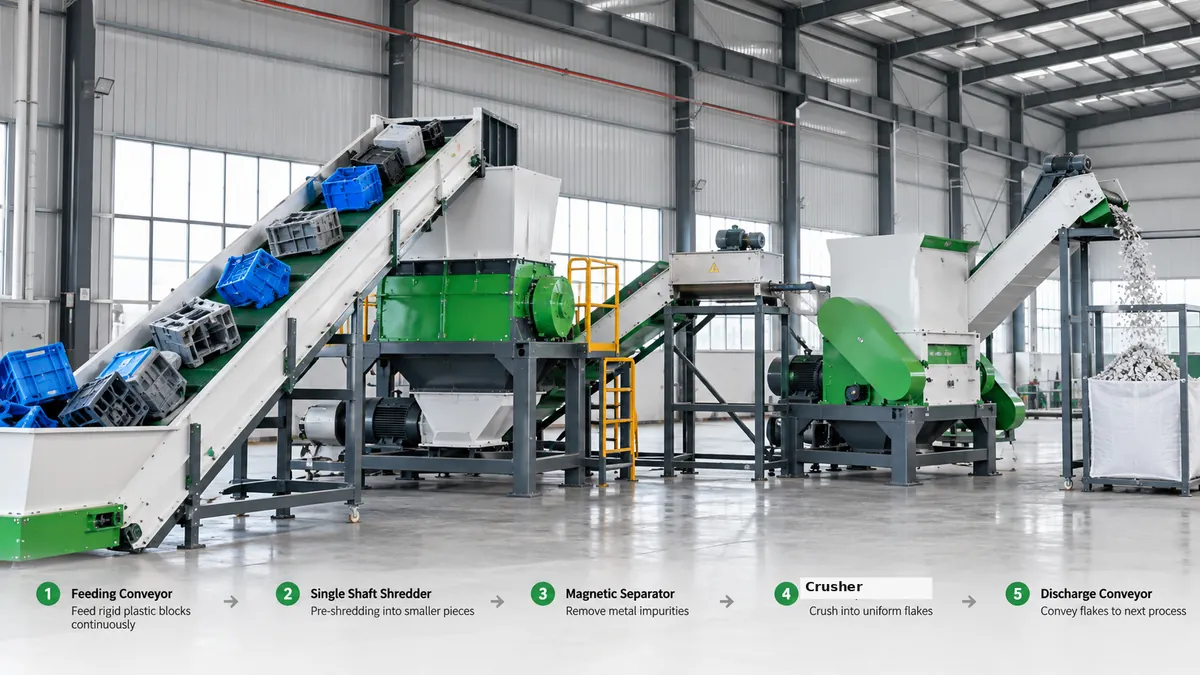
A two-stage system becomes useful when the incoming product is much larger than the final particle size required. The shredder solves the feeding and bulk-reduction problem; the crusher solves the final-size problem.
A good example is a large plastic bin. A complete bin may be too wide and too thick to feed efficiently into a conventional crusher. A single-shaft shredder can first tear the bin into pieces. These pieces can then be transferred by conveyor into a crusher fitted with an appropriate screen, producing smaller and more uniform flakes for washing or extrusion.
The same logic applies to pallets, large drums, thick plastic lumps and some large pipe scrap. Trying to force these materials directly into a crusher may require a very large cutting chamber and motor, while still creating unstable feeding and high impact loading. Splitting the work between two machines often gives more stable production.
Why “motor power” is not enough to compare machines
Buyers often compare a 55 kW, 75 kW or 90 kW crusher as if motor power directly represents capacity. It does not. Motor power is only one part of the machine design.
For a crusher, actual output is influenced by the cutting chamber width, rotor diameter, number and arrangement of moving and fixed knives, rotor speed, screen opening, feeding method, material bulk density and target flake size. A 75 kW machine with a poor rotor design can perform worse than a properly designed 55 kW machine on the same material.
For shredders, the same principle applies. Rotor diameter, effective working width, hydraulic pusher force, knife size, gearbox torque, screen opening and control logic all affect performance. The correct comparison is therefore based on the complete machine configuration and the actual waste sample, not on kW alone.
The target output size changes the machine choice
The required discharge size should be defined before the machine is selected. If the material will enter a washing line, the flakes need to be small enough for effective friction washing, float-sink separation, dewatering and drying. If the material will go directly into an extruder, the feed size must match the extruder or compactor feeding system.
For rigid plastics, crusher screen openings commonly fall within a range such as 8–20 mm depending on the application. Smaller openings can produce finer material but reduce throughput and increase cutting frequency. For primary shredding, larger screens are normally used because the objective is stable bulk reduction rather than final particle-size control.
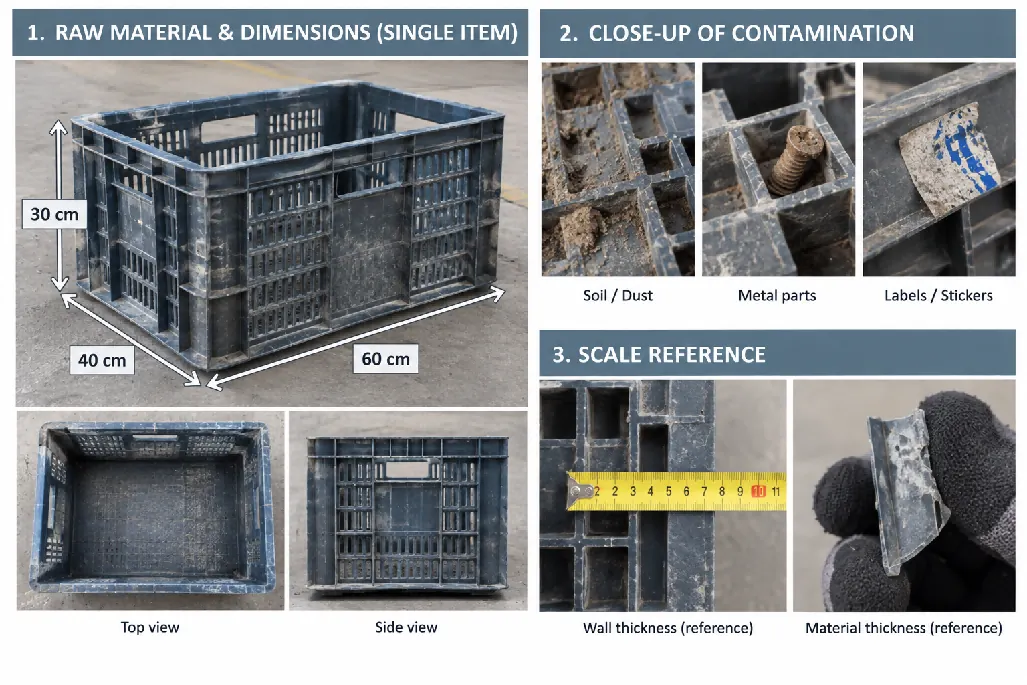
This is why asking only for “500 kg/h crusher” or “1,000 kg/h shredder” is not enough. A supplier should also ask for the material dimensions, wall thickness, photos or videos, contamination level, required final size and the next process after size reduction.
Film and woven bags require special attention
Flexible plastics behave very differently from rigid plastics. Film and woven bags are light, elastic and easy to wrap around a rotor or shaft. Their low bulk density also makes feeding inconsistent. For these materials, feeding control and anti-wrapping rotor design can be more important than using a larger motor.
A single-shaft shredder with hydraulic pushing is often useful for baled film, agricultural film, raffia and woven bags because it compresses and controls the material before cutting. Depending on the washing process, the shredded material may then enter a wet crusher, friction washer or directly enter the washing section.
For heavily contaminated agricultural film, sand and soil should also be considered. Abrasive contamination increases blade and screen wear, and a dry pre-cleaning step may reduce unnecessary wear before the main size-reduction machine.
How contamination affects shredder and crusher selection
Metal, stones, sand and other foreign materials have a direct effect on size-reduction equipment. Metal can damage knives, screens and rotors. Sand and mineral contamination accelerate knife wear. Thick labels, ropes or textiles may wrap around rotating parts.
For material with possible metal contamination, a magnetic separator is commonly installed on the conveyor after shredding or before the crusher. For highly contaminated waste, pre-sorting and pre-cleaning can significantly reduce maintenance cost. In a complete recycling line, size reduction should therefore be designed together with the sorting and washing stages rather than as an isolated machine purchase.
What information should you provide before asking for a quotation?
A reliable machine recommendation requires more than the name of the plastic. The following information allows the supplier to choose the correct shredder, crusher or two-stage system:
- Plastic type: PET, HDPE, PP, LDPE, LLDPE, PVC, ABS or mixed plastic.
- Product form: bottles, crates, bins, pallets, film, woven bags, lumps, pipes or other scrap.
- Maximum dimensions and approximate weight of one piece.
- Wall thickness or material thickness where relevant.
- Whether the waste is loose, baled or compacted.
- Contamination: sand, metal, labels, oil, cement, organic residue or other impurities.
- Required throughput in kg/h.
- Required final flake size.
- Next process: washing, drying, pelletizing, extrusion or direct reuse.
Photos and short videos of the actual waste are often more useful than a long written description. For unusual materials, a sample test is the best way to verify feeding behavior, output size and realistic throughput before finalizing the machine configuration.
Final selection: choose the process, not just the machine
A shredder and a crusher are not interchangeable simply because both make plastic smaller. The correct machine depends on what problem needs to be solved first.
If the main problem is that the waste is too large, bulky or difficult to feed, start with a shredder. If the main requirement is a smaller and more uniform flake size, use a crusher. If both problems exist, a shredder followed by a crusher is usually the more stable solution.
For a complete recycling line, size reduction should always be matched with the washing, drying and pelletizing stages. Correct particle size improves material flow, washing efficiency, drying consistency and extruder feeding. The best system is therefore not the machine with the largest motor or the smallest screen, but the one that matches the actual raw material and the required downstream process.
Frequently asked questions
Can a crusher replace a shredder?
Yes, when the material can be fed safely and continuously into the crusher and the crusher achieves the required throughput and flake size. Large, bulky or thick products usually need to be shredded first.
Why does the crusher screen size matter?
A smaller screen opening produces smaller flakes but keeps material in the chamber longer, which normally means lower throughput, higher energy use and faster blade wear. Choose the screen for the next process.
Is a crusher with a larger motor always better?
No. Cutting chamber width, rotor design, knife arrangement, screen opening, feeding method and the material itself determine real output. A well-designed 55 kW crusher can outperform a poorly designed 75 kW one.
When should a shredder and a crusher be used together?
When the incoming product is much larger than the final flake size, such as bins, pallets, drums, thick lumps and some large pipe. The shredder solves feeding; the crusher controls the final size.
Is a plastic granulator the same as a plastic crusher?
In most plastic recycling contexts, yes. A plastic granulator, plastic crusher and plastic grinder all cut prepared material with rotor and bed knives and control flake size with a screen. Some suppliers keep the word granulator for smaller, screen-controlled machines beside injection or extrusion lines, but the working principle is the same.
Material-specific recommendation
Not sure which machine fits your waste?
Send us photos and a few details of the real material. Our engineers will recommend a suitable size-reduction configuration and, where needed, arrange a material trial.
Request a recommendation- Photos or a short video of the waste
- Dimensions and weight of one piece
- Required throughput and output size
- The next process step