
Washing Lines
What Is a PET Bottle Washing Line and How Does It Work?
August 12, 2026 · 6 min read
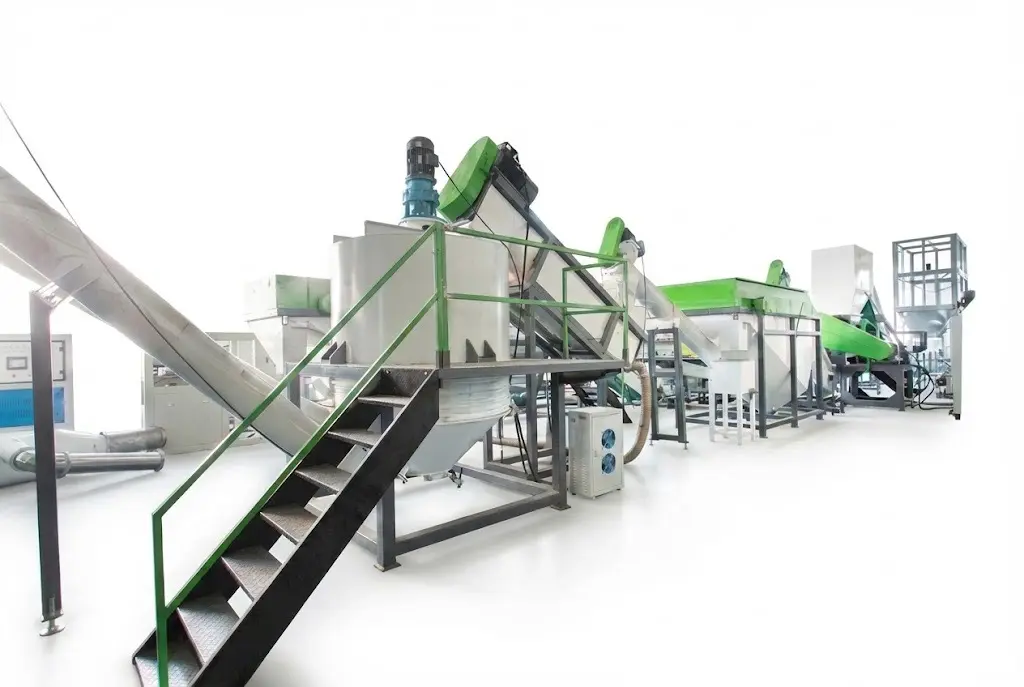
A PET bottle washing line is a complete recycling system that converts post-consumer PET bottles into clean PET flakes. Those flakes are the raw material for fiber, sheet, strapping and downstream rPET applications — and the quality of the flakes determines the value of everything that follows.
That process is what our PET bottle washing line is built to do, from bale opening through drying.
The process at a glance
A typical line moves through eight stages: bale opening and feeding, trommel and manual sorting, label removal, wet crushing, hot and friction washing, float-sink separation, dewatering and hot-air drying, and finally cyclone storage. Each stage removes a specific contaminant so the flakes meet a tight purity target.
Bale opening and sorting
Compacted bottle bales are opened and metered into the line at a stable rate. A trommel screen removes sand, stones, loose labels and visible non-PET contamination before crushing, so the rest of the line works on a cleaner feed. A label remover then strips PVC/PP labels from the bottles before they reach the crusher.
Wet crushing
Bottles are crushed into a controlled flake size while water is injected at cutting time. The water limits heat build-up that could degrade the PET and carries away loose dirt. Getting the flake size right matters: too large and the washing stages struggle; too small and you create fines that clog downstream screens.
Hot washing vs cold washing
Cold washing can be enough for low contamination and lower-grade output. Hot washing — typically a heated tank with washing chemistry — is recommended when glue, oil and labels are heavy, or when the flakes must meet a higher quality grade. Most serious PET recyclers run hot washing for fiber, sheet and bottle-to-bottle feedstock.
Those stages sit together in a complete PET bottle washing and recycling system, so the flakes leave dry enough for fiber, sheet or pelletizing.
Read the full comparison: hot washing vs cold washing in a PET washing line →
Float-sink separation
In a float-sink tank, PET flakes sink while PP/PE caps and labels float and are skimmed off. This density-based separation is one of the most energy-efficient steps in the line and is essential for removing the non-PET fraction from mixed bottle streams.
Output quality
On a properly configured line, reference targets include moisture below 0.9%, label below 20 ppm, PVC below 50 ppm, PP/PE below 20 ppm and total impurity below 100 ppm. Actual values depend on input bottle quality, hot wash configuration, water treatment and operation.
The figures above are the reference we use when sizing our PET washing line around a real bottle stream.
Before buying a line, share your bottle source, contamination level, target kg/h output and final flake use. The line should be configured around your material — not the other way around.