Hot Washing vs Cold Washing in a PET Washing Line: Which Process Do You Need?
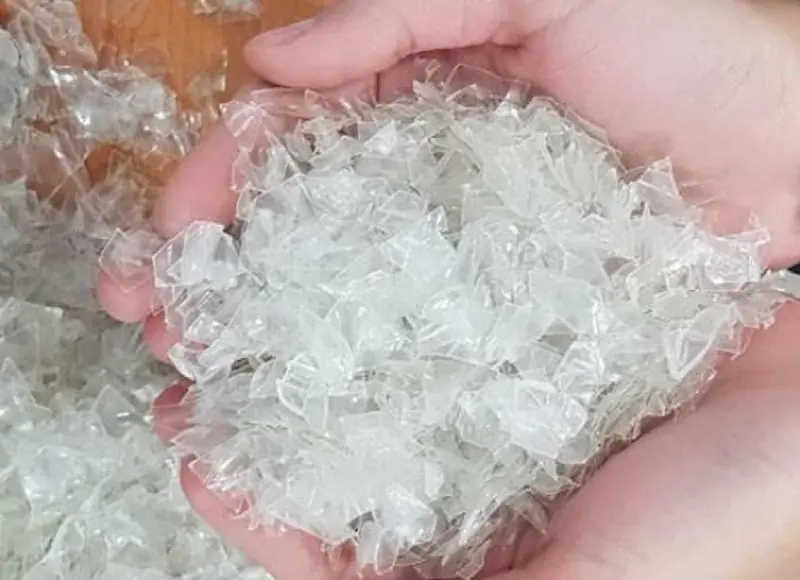
One of the most common questions when planning a PET bottle washing line is whether a hot washing system is really necessary. The answer depends on the condition of the bottles and the quality required from the final PET flakes. Cold washing removes loose dirt, beverage residue, labels, caps and many surface contaminants; hot washing is added when the line must remove adhesive residue, oil, grease and organic contamination more thoroughly.
The short answer
Cold washing can be enough for relatively clean PET with little glue or oil, when the target flake specification is modest. Hot washing — typically around 70–90°C with caustic soda — is needed when post-consumer bottles carry label adhesive, grease or organic residue, or when the flakes go to sheet, strapping, pelletizing or bottle-to-bottle preparation. In practice, high-quality PET flakes washing is rarely ‘hot or cold’: cold washing and float-sink separation remove the bulk contamination first, hot washing handles what is stuck to the surface, and friction washing and rinsing remove what the hot washer has loosened.
Contents
- 01What cold washing actually does
- 02What cold washing does not remove well
- 03What hot washing adds to the process
- 04Which contaminants are most affected by hot washing?
- 05The real PET washing line sequence: cold wash, hot wash, then rinse again
- 06When is cold washing usually enough?
- 07When should you strongly consider hot washing?
- 08Fiber-grade, sheet-grade and bottle-to-bottle flakes need different washing
- 09Hot washing adds cost — but where does the cost come from?
- 10Temperature alone does not determine cleaning quality
- 11Why rinsing after hot washing is critical
- 12How hot washing affects downstream pelletizing
- 13A practical decision table for buyers
- 14What should you tell the supplier before deciding?
- 15Final answer: which process do you need?
- Frequently asked questions
What cold washing actually does
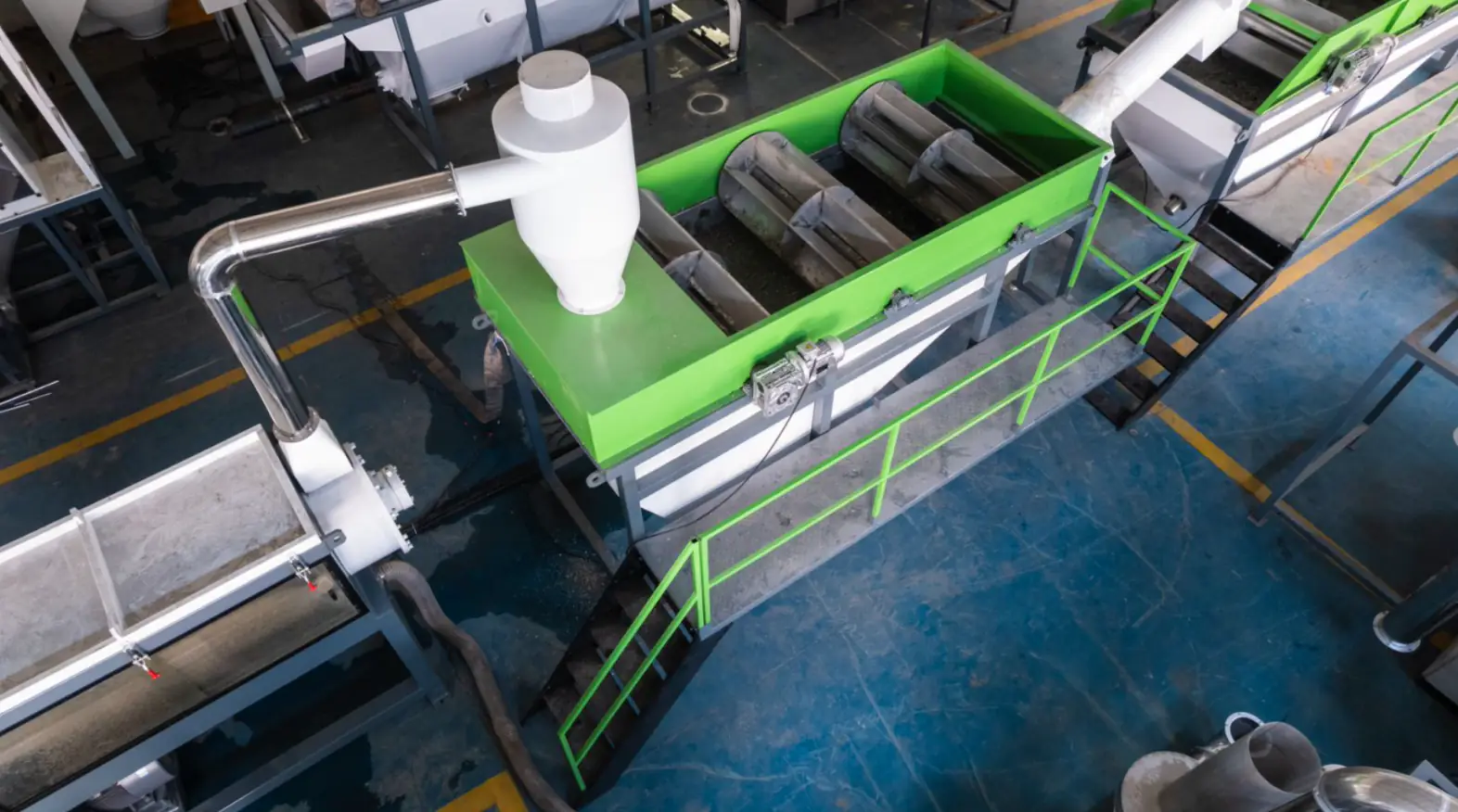
Cold washing uses ambient or moderately warmed water together with mechanical action to remove contamination from PET bottles and flakes. Depending on the line design, cold-washing stages may include bottle pre-washing, wet crushing, float-sink separation, friction washing, rinsing and centrifugal separation.
Cold water is effective for removing loose soil, dust, beverage residue and many lightweight contaminants. After crushing, float-sink separation also removes polyolefin materials such as PP and PE caps and rings, because they float while PET sinks. Friction washers provide strong mechanical rubbing that helps detach paper, label fragments and loose surface contamination.
For relatively clean post-industrial PET scrap or selected bottle streams with limited adhesive and oil contamination, a cold-wash-based system can be sufficient. It also has lower energy demand and simpler chemical management than a hot-wash system.
What cold washing does not remove well
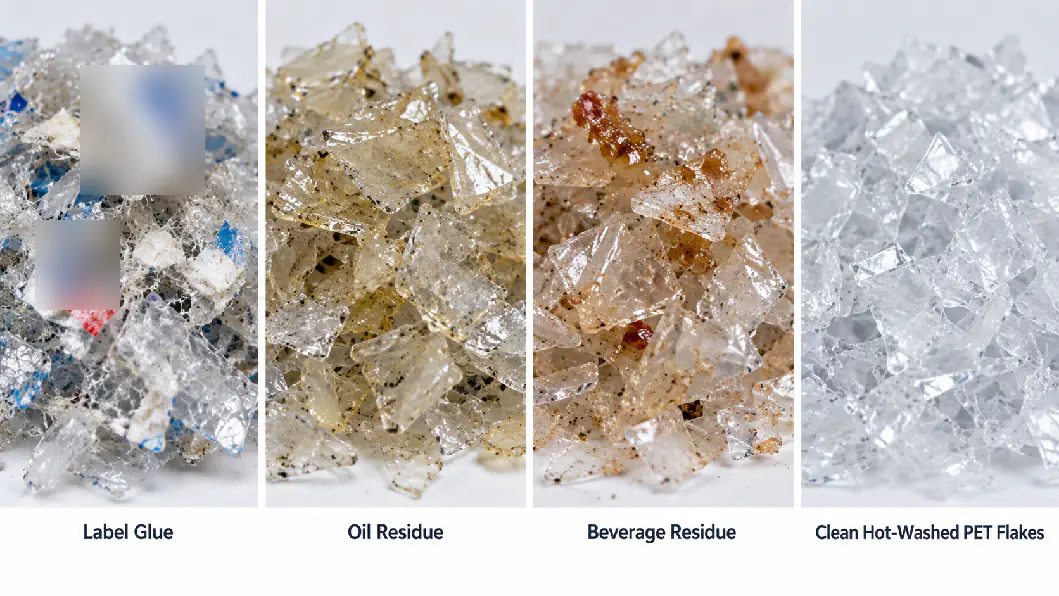
The limitation of cold washing appears when contamination is strongly attached to the PET surface. Pressure-sensitive label adhesive, hot-melt glue, cooking oil, cosmetic residue and greasy organic contamination are much more difficult to remove with cold water and mechanical friction alone.
A flake can look visually clean while still carrying a thin adhesive film. During later extrusion, residual glue and organic contamination can contribute to yellowing, black specks, odor, filter loading and unstable melt quality. This is why a PET bottle washing line should be judged by final flake quality rather than by how clean the bottles look after one washing stage.
Cold washing is also less forgiving when the incoming bottle stream varies from batch to batch. A line that works well on clean water bottles may struggle when the feedstock suddenly contains more adhesive labels, edible-oil bottles or bottles with sticky beverage residue.
What hot washing adds to the process
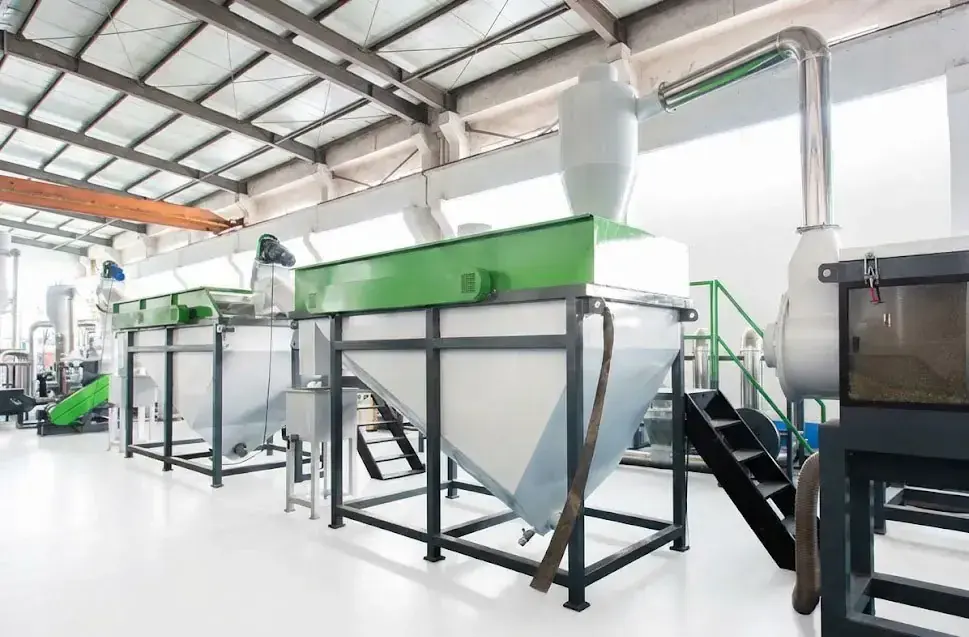
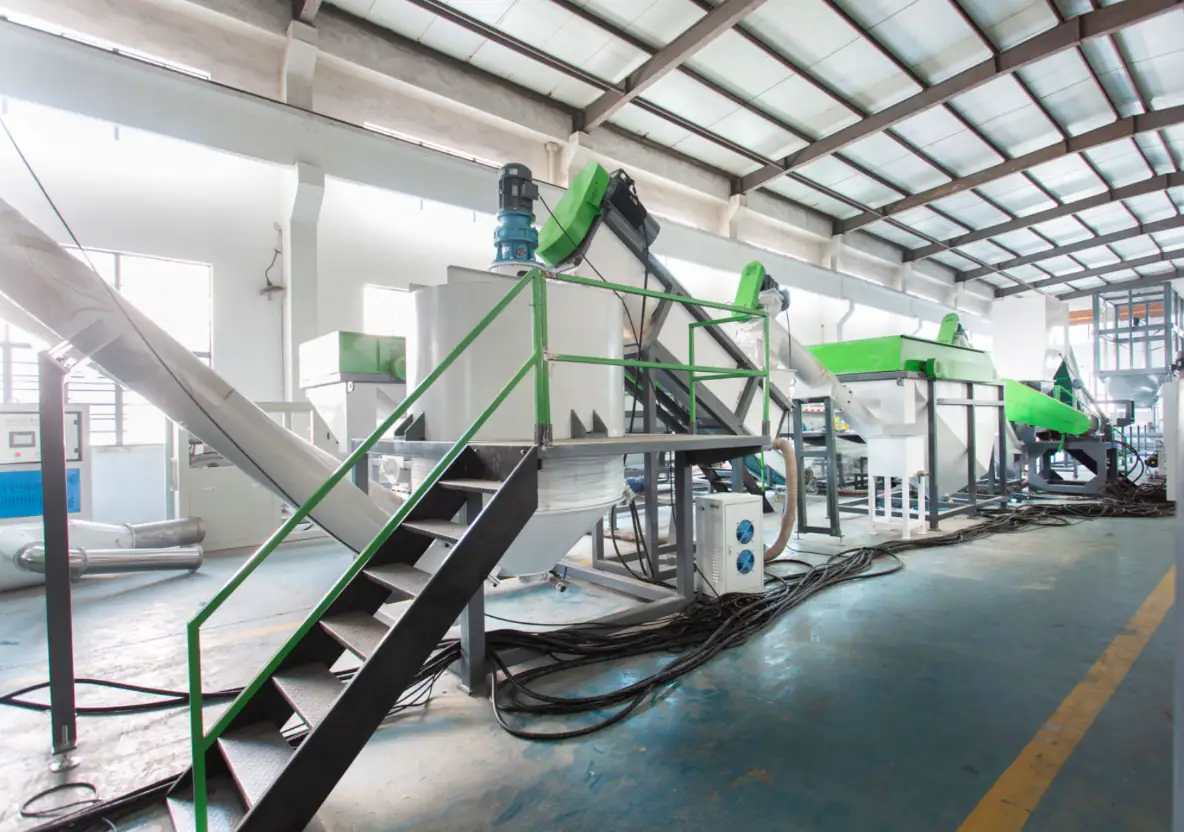
Hot washing combines elevated temperature, controlled residence time, mechanical agitation and, where required, chemical additives to remove contamination that is difficult to detach in cold water.
In commercial PET washing systems, hot-water temperatures are commonly around 70–90°C. Caustic soda is also used in many systems, often at approximately 1–2% depending on the process design and contamination level. These values are not universal settings: temperature, chemical concentration and residence time must be adjusted to the label adhesive, the oil contamination, the line design and the wastewater-treatment requirements.
The purpose of the hot washer for PET bottle flakes is not simply to ‘wash harder’. It changes the cleaning mechanism. Heat softens or loosens many adhesives and oily residues, while alkaline chemistry helps break down grease and certain organic contamination. Agitation then separates these contaminants from the PET surface so they can be removed by downstream friction washing and rinsing.
Which contaminants are most affected by hot washing?
| Contamination | Cold washing | Hot washing | Practical note |
|---|---|---|---|
| Loose dust / soil | Good | Good | Usually removed before or during the early washing stages |
| Beverage residue | Usually good | Very good | Sticky sugar residue becomes easier to remove with heat |
| PP / PE caps and rings | Separated mainly by float-sink | Separated mainly by float-sink | Density separation remains the key mechanism |
| Loose paper / label fragments | Good with friction washing | Very good once the adhesive is softened | Label removal before crushing reduces the washing load |
| Label glue / adhesive film | Limited to moderate | Much better | One of the main reasons for adding hot washing |
| Cooking oil / grease | Limited | Much better | Hot alkaline washing is especially useful |
| Cosmetic / organic residue | Limited to moderate | Better | Depends on the contamination chemistry |
| PVC / PETG label material | Not solved by washing alone | Not solved by washing alone | Requires label removal and/or sorting; hot washing is no substitute for material separation |
The real PET washing line sequence: cold wash, hot wash, then rinse again
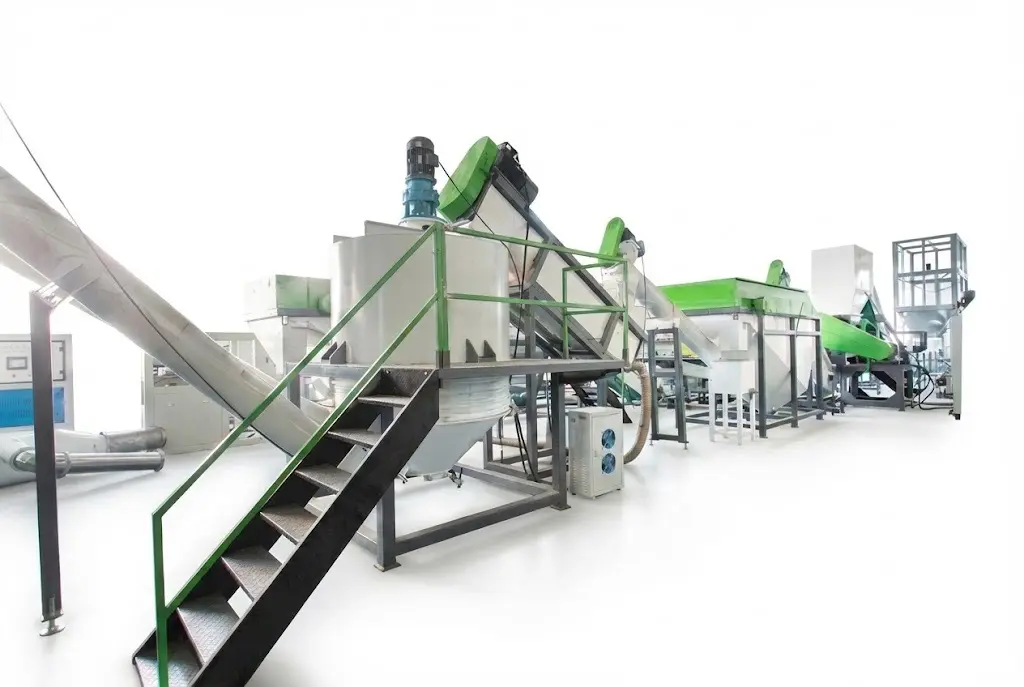
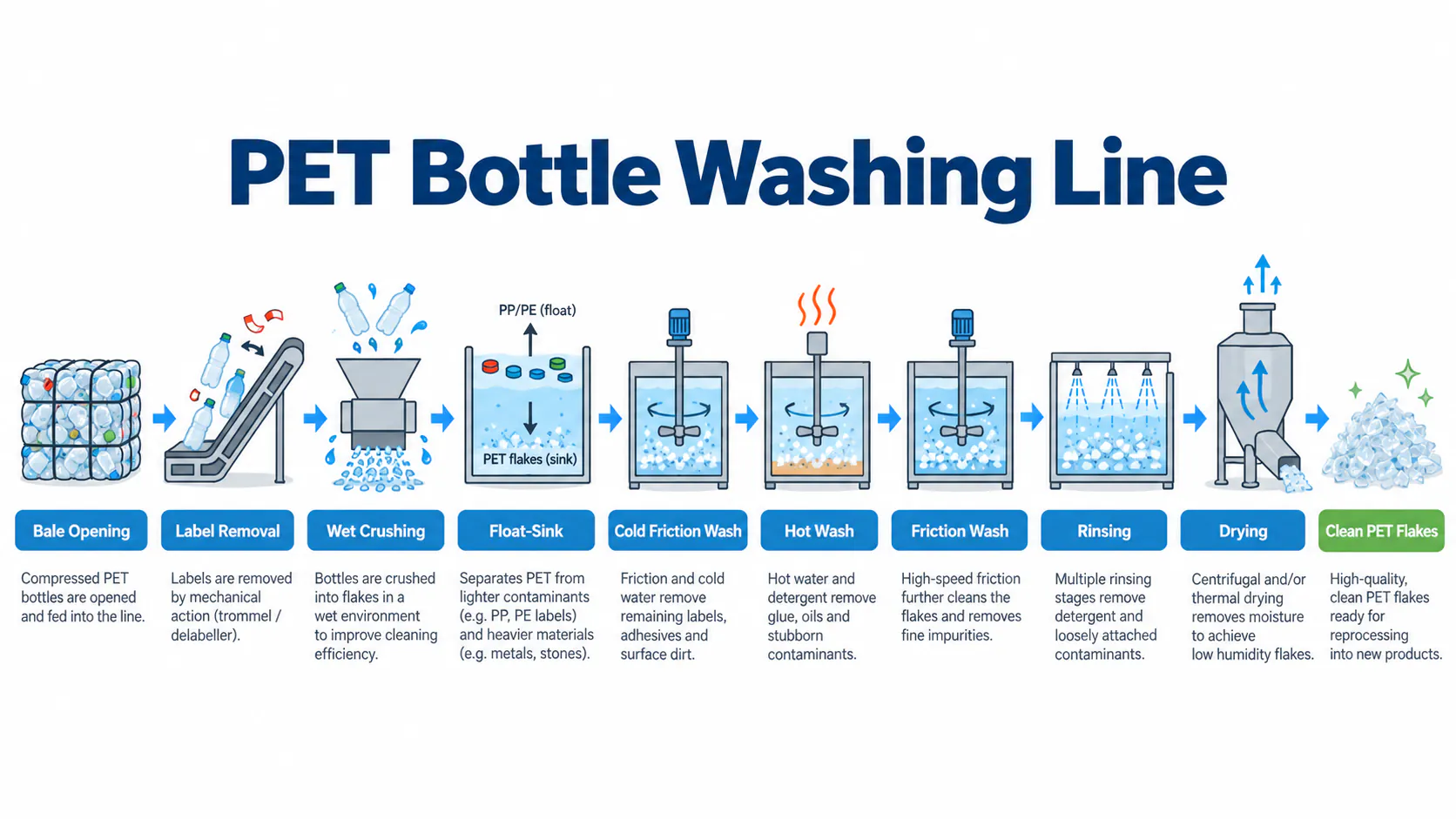
A well-designed hot-wash PET line should not send extremely dirty flakes directly into the hot washer. Doing so wastes heat and chemicals, because the hot system is forced to remove contamination that could have been eliminated earlier at much lower cost. A typical process for post-consumer PET bottles follows this sequence:
- Bale opening and bottle feeding
- Pre-sorting and metal removal
- Label removal
- Bottle pre-washing where required
- Wet crushing into flakes
- Float-sink separation for caps and rings
- Cold friction washing / preliminary rinsing
- Hot washing with controlled temperature and chemical dosing
- High-speed friction washing after the hot wash
- Multi-stage rinsing to remove loosened contamination and chemical residue
- Centrifugal dewatering
- Thermal / air drying
- Flake separation, label removal and optical sorting where required
The exact order varies by project, but the principle is consistent: remove bulk contamination first, use hot washing for difficult surface contamination, and rinse thoroughly afterward. For a stage-by-stage overview of the whole line, see how a PET bottle washing line works.
When is cold washing usually enough?
A cold-wash line can be the right choice when the feedstock is relatively clean and the final application does not require deep removal of glue, grease and odor.
Typical cases include selected post-industrial PET scrap, clean production waste, pre-sorted bottle streams with low adhesive contamination, or projects where the flakes go to lower-value applications and the buyer has verified that the required quality can be reached without hot washing.
Cold washing also makes sense when infrastructure is limited. A hot-wash system requires heating energy, chemical storage and dosing, insulated tanks, more intensive rinsing and stricter wastewater control. For small or entry-level projects, these additional systems can significantly increase investment and operating complexity.
However, removing the hot-wash stage purely to reduce the initial price can be a false economy if the incoming bottles are dirty. A cheaper line that produces flakes with residual glue, odor or oil may lower the selling price of the recycled PET or make downstream extrusion much more difficult.
When should you strongly consider hot washing?
Hot washing should be strongly considered when any of the following conditions apply:
- The bottles carry a high proportion of pressure-sensitive or hot-melt adhesive labels.
- The feedstock includes cooking-oil, sauce, cosmetic or other greasy PET containers.
- The bottle stream is post-consumer and contamination varies significantly from bale to bale.
- The flakes must have low odor and low residual organic contamination.
- The flakes will be sold for higher-value sheet, strapping or pelletizing applications where cleanliness strongly affects downstream quality.
- The project prepares material for bottle-to-bottle or other high-specification routes, where washing quality is only the first part of a wider decontamination and quality-control system.
Fiber-grade, sheet-grade and bottle-to-bottle flakes need different washing
The final application of the PET flakes should be defined before the washing line is configured.
For some fiber applications, the customer may accept a broader contamination range as long as the flakes are dry, reasonably clean and suitable for stable extrusion. For sheet and higher-value PET flakes pelletizing, residual adhesive, oil, color contamination and fine dust matter more, because they affect appearance, filtration pressure and final product consistency.
Bottle-to-bottle recycling has the highest process-control expectations. Hot washing is commonly part of the preparation route, but food-contact recycling normally requires additional validated decontamination, controlled input quality, traceability and downstream processes such as decontamination reactors and/or SSP, depending on the technology and regulatory route.
Hot washing by itself does not make PET food-grade. It prepares clean flakes; food-contact use depends on a validated decontamination process after washing.
| Final application | Typical wash intensity | Hot wash | Main concern |
|---|---|---|---|
| Fiber / filling material | Basic to medium | Optional, depending on feedstock | Dirt, moisture, stable extrusion |
| Strapping | Medium to high | Often recommended | Glue, fines, color and extrusion stability |
| Sheet / thermoforming | High | Usually recommended for post-consumer feedstock | Appearance, black specks, odor, filtration |
| Pelletizing | High | Often recommended | Melt quality, odor, filter life, IV preservation downstream |
| Bottle-to-bottle | Very high | Normally part of the washing route | Strict contamination control plus validated downstream decontamination |
Hot washing adds cost — but where does the cost come from?
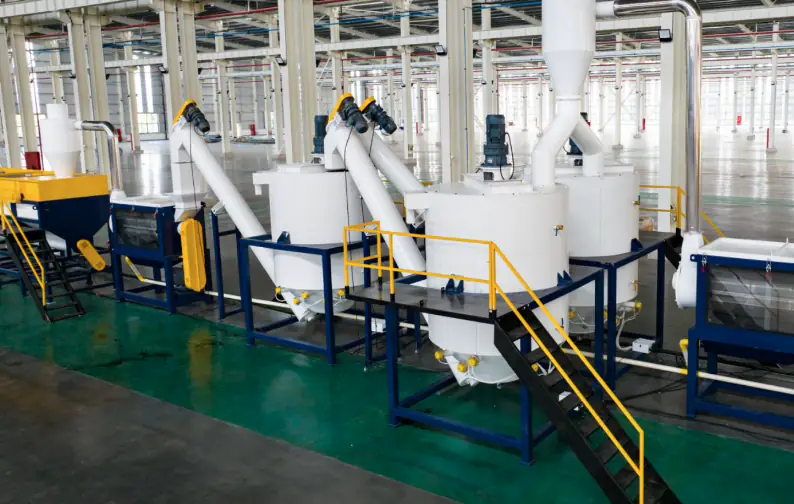
The hot-wash tank itself is only one part of the additional cost. A proper hot-wash section may require a preheating system, an insulated washing vessel, steam or electric heating, chemical dosing, circulation pumps, friction washing, additional rinsing, chemical-resistant piping and upgraded wastewater treatment.
Operating cost is driven mainly by heat consumption, chemical consumption, fresh-water demand, wastewater treatment and the amount of contamination that reaches the hot-wash stage. Good pre-sorting and pre-washing therefore reduce the running cost of hot washing.
Heat recovery can also be considered on larger lines. Reusing heat from hot process water, or optimizing the sequence between preheating and hot washing, can reduce steam or electrical demand.
Temperature alone does not determine cleaning quality
A common mistake is to compare hot-wash systems only by maximum water temperature. Higher temperature does not automatically mean cleaner flakes.
Cleaning performance depends on the combination of temperature, chemical concentration, residence time, agitation, flake loading and the contamination being removed. If residence time is too short, flakes leave before the adhesive is fully loosened. If chemical concentration is poorly controlled, operating cost rises and rinsing becomes more difficult. If the tank is overloaded, contact between flakes and washing solution becomes inconsistent.
Compare hot-wash systems by how stably they hold temperature, concentration and residence time — not by the highest temperature they can reach.
Why rinsing after hot washing is critical
After hot washing, loosened glue, oil and chemical residue must be removed from the PET flakes. With insufficient rinsing, contamination can redeposit on the flakes or alkaline residue can remain in the final product.
This is why high-quality PET lines normally include strong friction washing and multiple rinsing stages after the hot washer. The rinsing-water system should be designed so that dirty water does not simply carry contamination back onto the product.
Water quality and flow direction matter. Counter-current rinsing, staged water replacement and filtration reduce fresh-water consumption while keeping the final rinse clean.
How hot washing affects downstream pelletizing
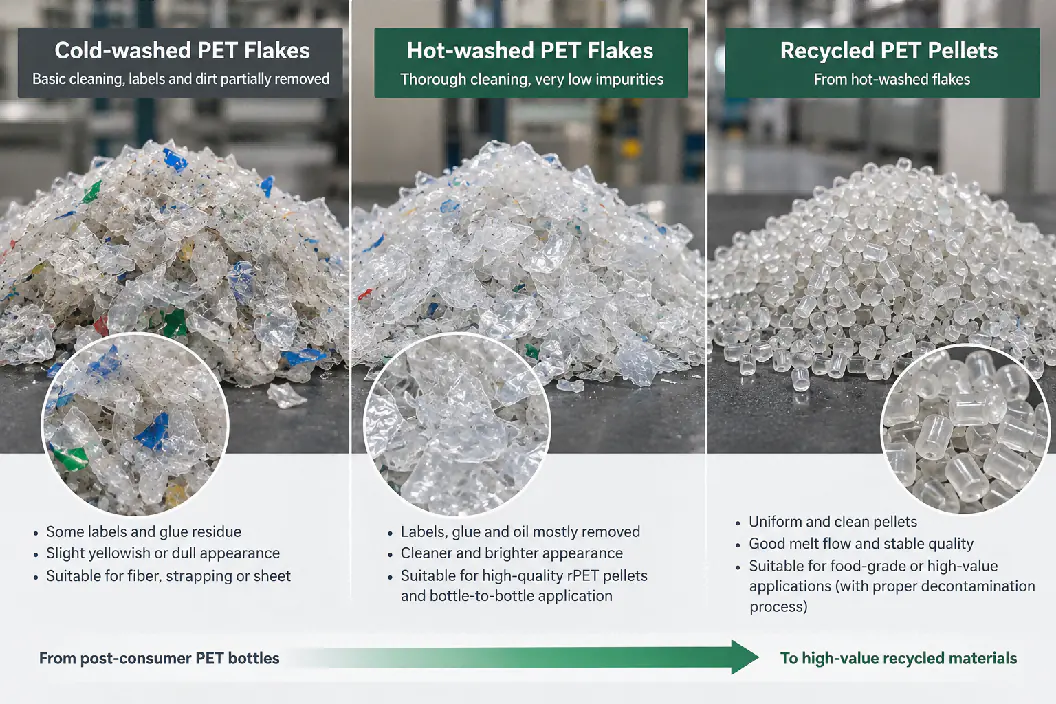
Better washing does not only improve the appearance of PET flakes. It also stabilizes the entire downstream pelletizing process.
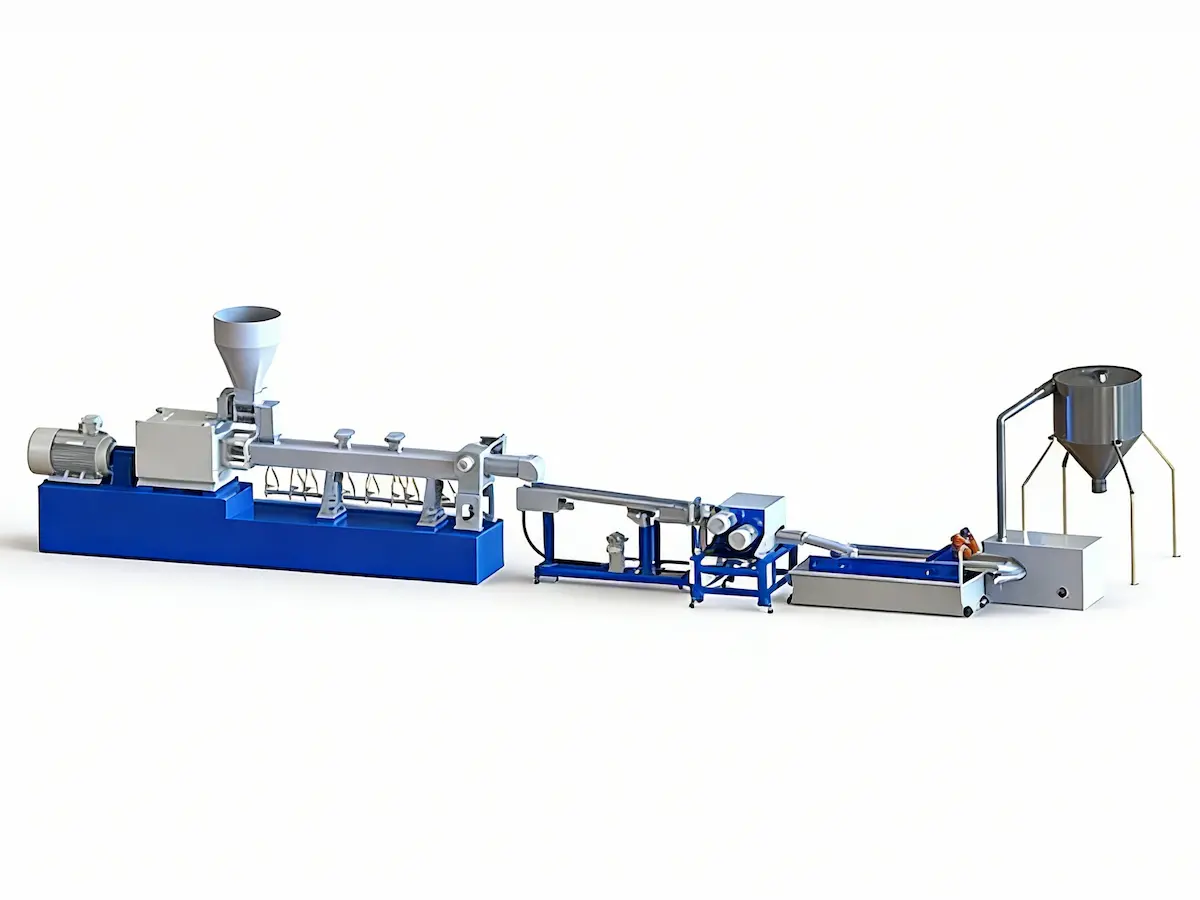
Residual glue and organic contamination can increase melt-filter pressure, shorten screen-change intervals and create black specks or odor in the pellets. Dirty flakes also leave more deposits inside the extruder and filtration system.
PET is sensitive to moisture and thermal history, so good washing must be followed by efficient dewatering, drying and, before extrusion, proper crystallization or dehumidifying drying. These steps are what preserve intrinsic viscosity during PET pelletizing.
A practical decision table for buyers
For buyers, the key question is not whether hot washing is better in general. It is what contamination is present in the feedstock, what the flakes will be used for, and what quality target the line must reach consistently.
| Feedstock / project condition | Recommended approach | Why | What to confirm |
|---|---|---|---|
| Clean post-industrial PET | Cold wash may be sufficient | Low glue and organic contamination | Final product specification |
| Sorted water bottles, low label/glue contamination | Cold wash or light hot wash, depending on target | Feedstock is comparatively clean | Actual label type and downstream use |
| Mixed post-consumer beverage bottles | Hot wash recommended | Variable glue, beverage and organic residue | Bale composition and required flake purity |
| Oil / sauce / cosmetic PET bottles | Hot wash strongly recommended | Grease and organic residue are difficult to remove cold | Oil level, odor target and wastewater system |
| High-value sheet or pelletizing | Hot wash generally recommended | Residual glue and oil affect melt quality | Filtration, color and odor specification |
| Bottle-to-bottle preparation | Hot wash normally required as part of the line | High cleanliness requirement | Complete decontamination route and regulatory target |
Need both? Our PET flakes washing machine configurations combine cold friction washing, hot washing and multi-stage rinsing in one line.
What should you tell the supplier before deciding?
A supplier cannot correctly recommend cold or hot washing from capacity alone. Before the line is configured, provide as much information as possible about the real bottle stream:
- Bottle source: municipal collection, deposit-return system, commercial waste, factory scrap or mixed post-consumer waste.
- Typical bottle types: water, carbonated drinks, edible oil, sauce, cosmetics or mixed PET packaging.
- Label types: sleeve labels, paper labels, pressure-sensitive labels and the amount of glue present.
- Contamination level: sand, oil, beverage residue, organic waste, labels, PVC/PETG and metals.
- Required capacity in kg/h.
- Target flake application: fiber, strapping, sheet, pelletizing or bottle-to-bottle preparation.
- Required moisture, PVC level, label residue and other quality targets where available.
- Available steam, electrical heating, fresh water and wastewater-treatment capacity.
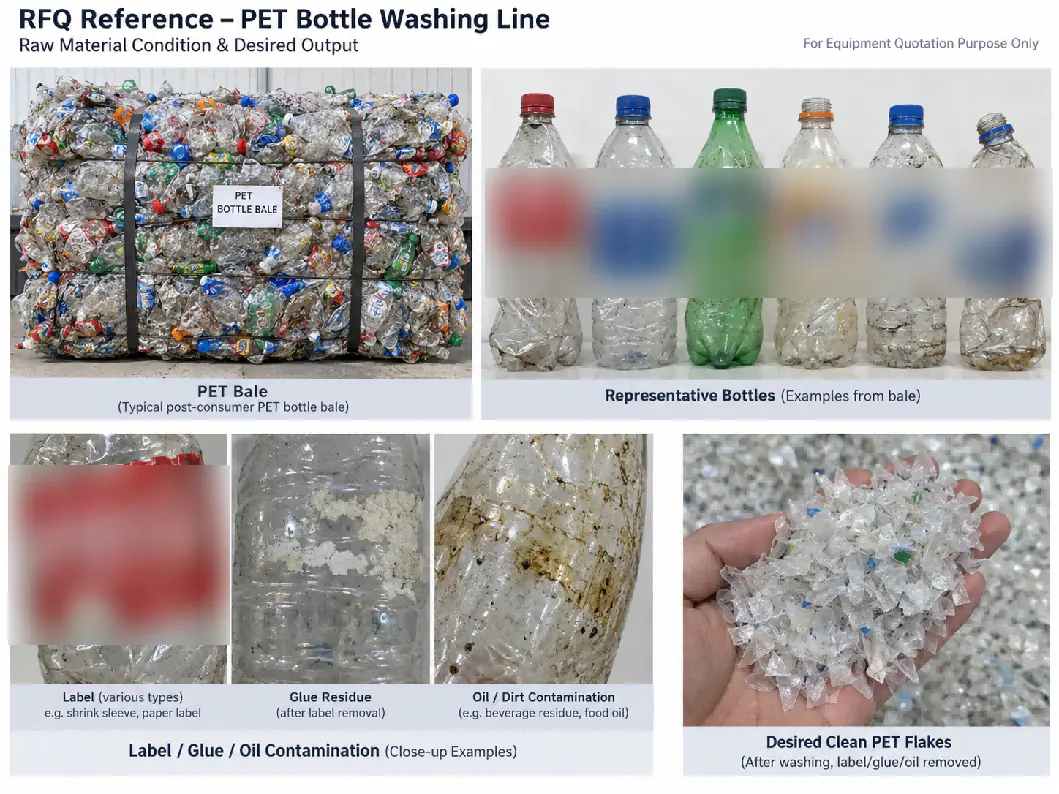
Photos of complete bales, individual bottles, labels and dirty bottle surfaces are extremely useful. For uncertain feedstock, a material washing test gives better information than a general description such as ‘normal PET bottles’.
Final answer: which process do you need?
Cold washing
Choose cold washing when the feedstock is relatively clean, adhesive and oil contamination are limited, and the required flake specification can be reached without chemical hot washing.
Hot washing
Add hot washing when the bottle stream contains significant glue, grease, organic residue or variable post-consumer contamination, or when the project needs higher-value flakes for sheet, strapping, pelletizing or bottle-to-bottle preparation.
For most high-quality post-consumer PET projects, the reliable solution is not hot washing instead of cold washing. It is a correctly designed sequence of pre-cleaning, cold mechanical washing, hot washing, friction washing and final rinsing — each stage removes a different type of contamination, and the final PET quality depends on how well they work together.
Frequently asked questions
Is cold washing enough for PET bottle flakes?
Cold washing can be enough for clean post-industrial PET or sorted bottles with little glue and oil, when the flakes go to less demanding uses such as some fiber grades. Mixed post-consumer bottles with adhesive labels, grease or variable contamination usually need hot washing to reach a consistent flake quality.
What temperature is used for hot washing PET flakes?
Commercial PET hot-wash systems commonly run at around 70–90°C, often with about 1–2% caustic soda. These are typical ranges, not universal settings: temperature, chemical concentration and residence time are adjusted to the label adhesive, oil contamination, line design and wastewater treatment.
Does hot washing make PET flakes food-grade?
No. Hot washing prepares clean flakes, but food-contact recycling normally also requires validated decontamination, controlled input quality, traceability and downstream processes such as decontamination reactors and/or SSP.
Can hot washing remove PVC or PETG labels?
No. PVC and PETG label material is not solved by washing, hot or cold. It must be removed by label removal before crushing and by flake separation or optical sorting.
Why is rinsing needed after hot washing?
Hot washing loosens glue, oil and contamination and leaves alkaline solution on the flakes. Friction washing and multi-stage rinsing remove them; without enough rinsing, contamination can redeposit and caustic residue can remain in the final flakes.
Washing recommendation
Not sure whether your bottles need hot washing?
Send photos of your bales, bottles and labels. Our engineers will recommend a cold, hot or combined washing configuration and can arrange a washing test on your material.
Get a washing recommendation- Photos of bales and individual bottles
- Label types and glue level
- Required capacity in kg/h
- Target flake application