PET Flakes Quality Specification: Moisture, PVC, Labels, Glue and Fine Dust
Clean-looking PET flakes are not automatically high-quality PET flakes. Two batches can look almost identical but behave very differently in extrusion because of moisture, PVC, residual label glue, polyolefins, metals or fine dust. For a PET washing-line buyer, flake quality should therefore be defined with measurable parameters rather than words such as ‘clean flakes’ or ‘high purity’.
The short answer
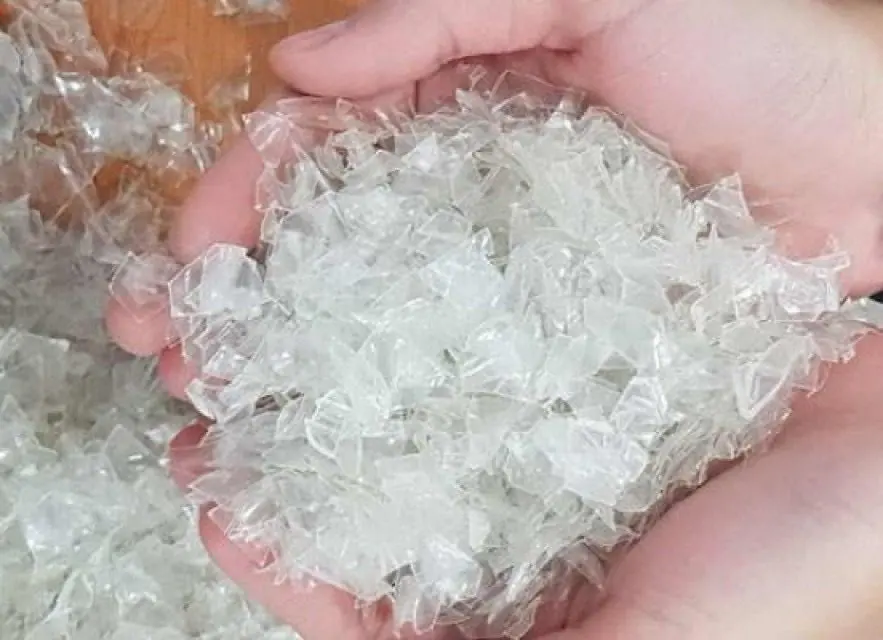
Good PET flakes are defined by measured limits, not by appearance. For high-quality washed rPET flakes, buyers typically specify moisture around or below 1%, PVC in the tens of ppm (often below 50 ppm), polyolefins, labels and glue in the tens to low hundreds of ppm, metals in the tens of ppm, a fines cut-off such as 0.5 mm, a flake-size range and a bulk density. There is no universal standard: the end use — fiber, strapping, sheet, pelletizing or bottle-to-bottle — sets the limits, and every value needs an agreed test method and sampling plan.
Contents
- 01Start with the final application, not with the washing machine
- 02Unwashed, cold-washed and hot-washed PET flakes
- 03Moisture: why a small percentage matters so much
- 04What causes high final moisture?
- 05PVC contamination: one of the most critical impurities in recycled PET
- 06Where does PVC enter a PET bottle stream?
- 07How should PVC be tested?
- 08Labels are not one single contaminant
- 09Residual glue can matter more than visible label pieces
- 10Fine dust: the contamination customers often ignore
- 11Where does excessive fine dust come from?
- 12Polyolefins: caps, rings and labels
- 13Metals: low concentration, high risk
- 14Flake size is a quality parameter, not just a crusher setting
- 15Bulk density tells you more than it first appears
- 16Color: clear, light-blue and green PET flakes
- 17A practical PET flake quality table
- 18Why the sampling method matters
- 19TDS and COA are not the same thing
- 20Which washing-line section should you check when quality is out of specification?
- 21What quality information should a washing-line buyer specify?
- 22Conclusion: quality is created across the whole line
- Frequently asked questions
Start with the final application, not with the washing machine
Before discussing washing equipment, define what the flakes will be used for. A PET bottle washing line should be designed backward from the required output quality.
A fiber producer may tolerate contamination that would be unacceptable for transparent sheet or high-quality pellet production. A bottle-to-bottle process may require very low levels of PVC, polyolefins, metals and other foreign polymers before the flakes even enter the validated decontamination stage.
This is why a quotation that promises only ‘PET flakes below 1% moisture’ is incomplete. Moisture matters, but it says nothing about PVC, residual glue, label fragments, color contamination or fine particles.
There is no single universal PET-flake specification. Buyers and suppliers agree a product specification, and high-value routes set much tighter limits than lower-value applications.
| Final application | Typical quality focus | Washing intensity | Additional control often needed |
|---|---|---|---|
| Fiber / filling | Moisture, dirt, stable feed, acceptable color | Basic to medium | Basic sorting and drying |
| Strapping | PVC, polyolefins, glue, IV stability, fines | Medium to high | Better sorting and melt filtration |
| Sheet / thermoforming | PVC, labels and glue, color, black specks, odor | High | Optical sorting and tighter QC |
| Pelletizing | Moisture, PVC, glue, fines, metal, melt stability | High | Drying, filtration, vacuum degassing |
| Bottle-to-bottle preparation | Very low foreign polymers, controlled contamination | Very high | Validated decontamination plus strict input control |
Unwashed, cold-washed and hot-washed PET flakes
PET flakes are traded under three broad process labels. Unwashed flakes are simply crushed bottles that still carry labels, caps, dirt and beverage residue; they need full washing before use. Cold-washed flakes have been through float-sink separation and friction washing in ambient water, which removes loose dirt and most caps but leaves much of the adhesive and oily residue. Hot-washed PET flakes have also passed through a heated, usually caustic, washing stage followed by rinsing, and are the normal starting point for sheet, strapping, pelletizing and bottle-to-bottle routes.
These labels describe the process, not the result. Two batches of hot-washed flakes can still differ widely in PVC, glue or fines, which is why the parameters below matter more than the name. For how the two washing processes compare, see hot washing vs cold washing in a PET washing line.
Moisture: why a small percentage matters so much
Moisture is one of the easiest PET-flake parameters to understand and one of the easiest to underestimate. Washed flakes leave the wet section carrying both surface water and water trapped between flakes or inside folds and irregular shapes.
A typical PET washing line reduces this water in stages. Mechanical dewatering removes most free water first, centrifugal drying removes more surface moisture, and thermal or hot-air drying is added when lower final moisture is required or the downstream process is sensitive to wet feed.
Commercial and regulatory-process examples frequently specify washed PET flake moisture around or below 1% before further recycling. Some published specifications accept slightly higher values, while other buyers require lower limits. The line supplier and the flake buyer should agree the test method and the maximum value rather than rely on a visual judgment.
Flake moisture after washing is not the same as the moisture required immediately before melting. PET is hygroscopic, so pelletizing or sheet extrusion normally needs further controlled drying. If wet PET enters the extruder, hydrolysis reduces intrinsic viscosity and mechanical performance — see how IV is preserved in PET pelletizing.
What causes high final moisture?
If the final PET flakes remain too wet, the problem is not always solved by adding a larger hot-air dryer. The root cause may be upstream:
- Centrifugal dryer capacity is too small for the actual throughput.
- The flakes are too large or irregular and trap more water.
- Screen or drainage areas are blocked by labels and fines.
- The dryer rotor or paddles are worn and no longer generate enough dewatering force.
- Material loading is too high, reducing residence time.
- Hot-air temperature or air volume is insufficient.
- Wet flakes are stored too long in poorly ventilated bins and reabsorb moisture.
A drying system should therefore be selected together with the crusher screen size, washing capacity and final storage system.
PVC contamination: one of the most critical impurities in recycled PET
PVC is especially harmful in PET recycling because PET and PVC process at very different temperatures. Even small amounts of PVC can degrade during PET processing and create dark specks, discoloration, odor and acidic degradation products.
This is why high-quality PET-flake specifications keep PVC in the tens-of-ppm range rather than treating it as a percentage contaminant. Some published food-contact recycling input specifications use PVC limits below 50 mg/kg, some commercial clear-flake specifications are tighter still, and lower-grade markets may accept higher values.
The correct target is set by the end user. A washing-line supplier should not promise a PVC figure without knowing the bottle source, the sorting system and the final application.
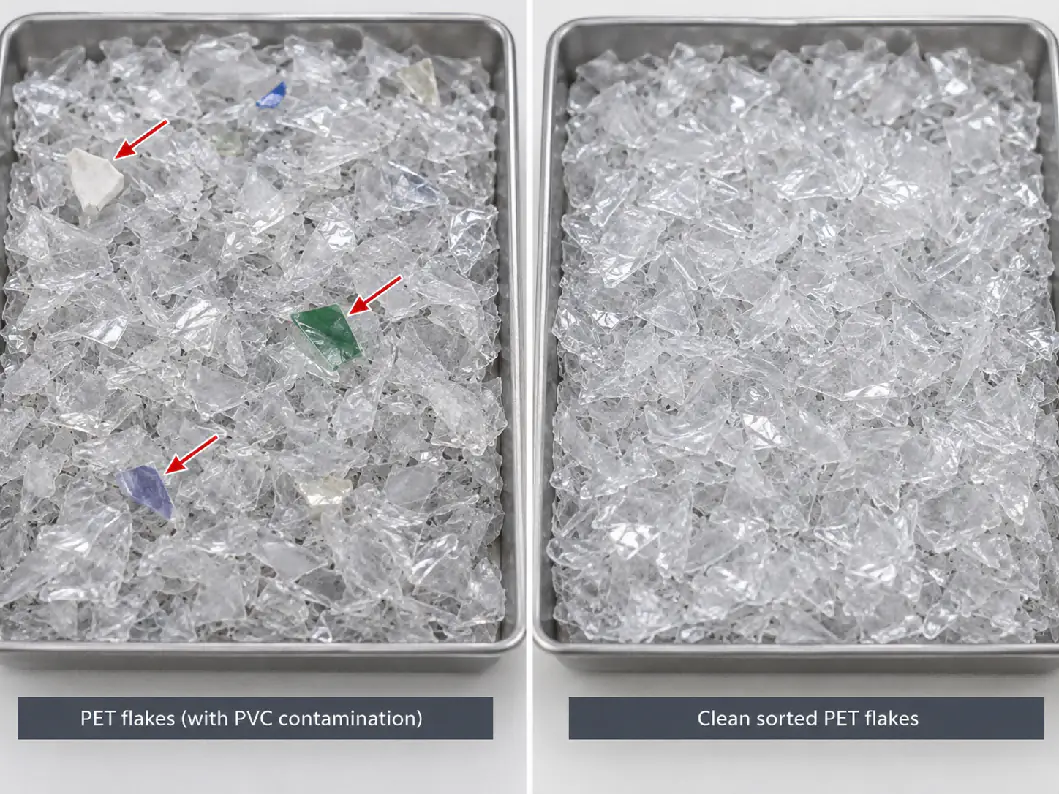
Where does PVC enter a PET bottle stream?
PVC can enter through complete PVC containers mixed into the bale, PVC shrink sleeves, fragments of PVC labels, seals or other packaging components.
Because PVC density is close to or above that of water, float-sink separation cannot reliably remove it after crushing. Once PVC has been chopped into flakes and mixed with PET, separation becomes much harder.
PVC control should therefore begin before crushing. Manual sorting, NIR bottle sorting, effective label removal and removal of non-PET containers are worth more than trying to correct the problem after the material has become small flakes. Flake sorting then provides a second control step, especially for high-value applications.
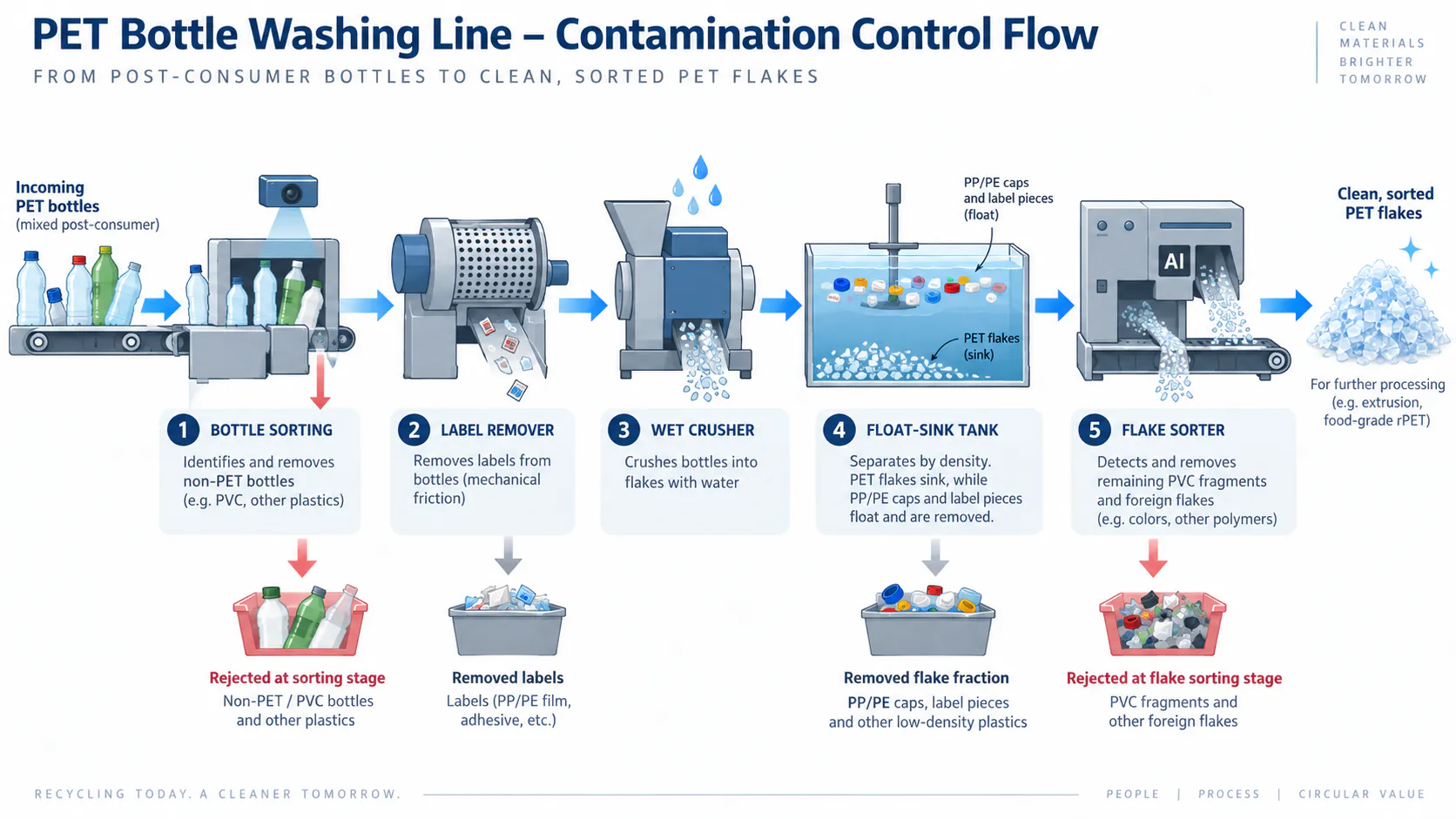
How should PVC be tested?
PVC cannot always be judged reliably by eye. A quality-control plan should define a repeatable test method and representative sampling.
Industry methods include visual or optical sorting analysis, hot-oven testing based on the different thermal behavior of PVC and PET, and specialized flake scanners. ASTM D5991, for example, describes procedures for separating and identifying PVC contamination in PET flake.
A specification such as ‘PVC below 50 ppm’ is meaningful only when both parties know how the sample is taken and how the result is measured.
Labels are not one single contaminant
‘Label contamination’ usually mixes several problems: paper fragments, PP/PE label film, PETG or PVC shrink sleeves, printing ink, adhesive and flakes that still carry glue on their surface.
These contaminants behave differently in a washing line. Polyolefin label fragments may float in a density-separation tank. Paper breaks into fine fibers that move with dirty process water. Shrink sleeves may require bottle sorting or label-removal equipment. Adhesive may stay attached to the PET surface and require hot washing.
This is why the label remover before crushing has a major impact on the downstream washing load. Removing as much label material as possible while the bottle is still intact reduces the label fragments that reach the crusher, hot washer and rinse-water system.
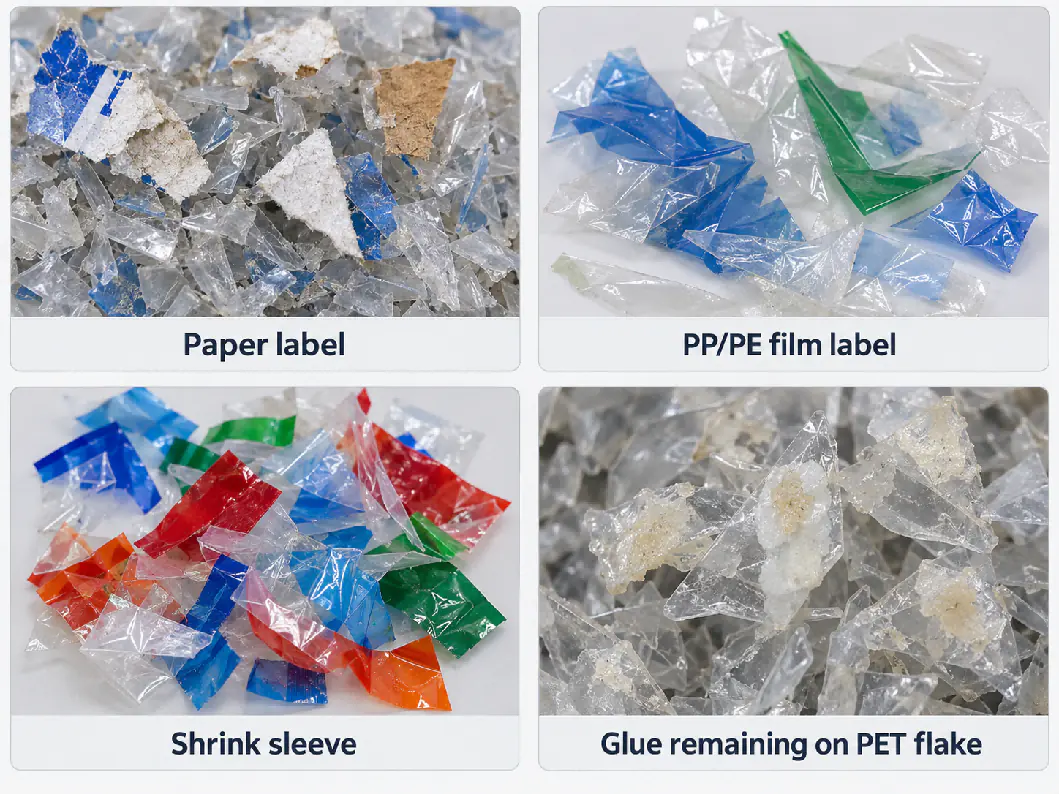
Residual glue can matter more than visible label pieces
A PET flake can be free of visible label film and still carry adhesive residue, especially from pressure-sensitive labels and some hot-melt adhesives.
Residual glue can darken or oxidize during extrusion, contribute to black specks, create odor and load the melt filter. Some high-quality flake specifications therefore measure flakes with residual glue separately from visible label fragments.
Hot washing, detergent or caustic treatment, controlled temperature, sufficient residence time and strong friction rinsing after the hot wash are the main tools for reducing adhesive residue. The best settings depend on the actual label and glue chemistry.
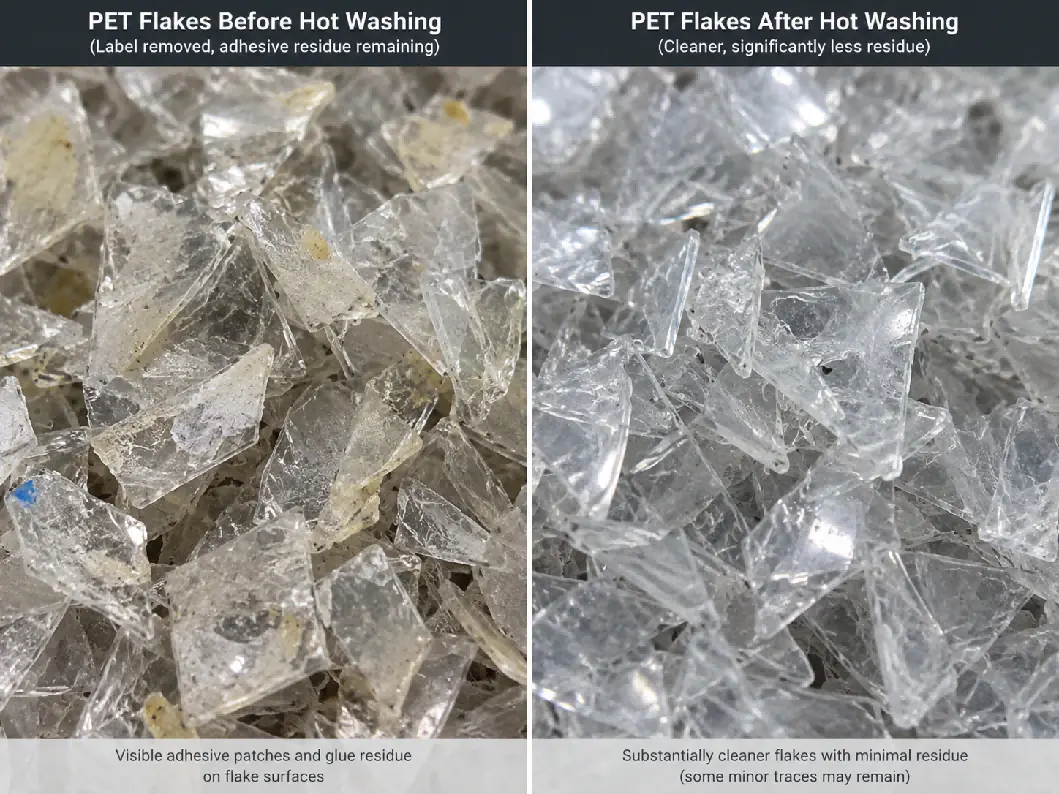
Fine dust: the contamination customers often ignore
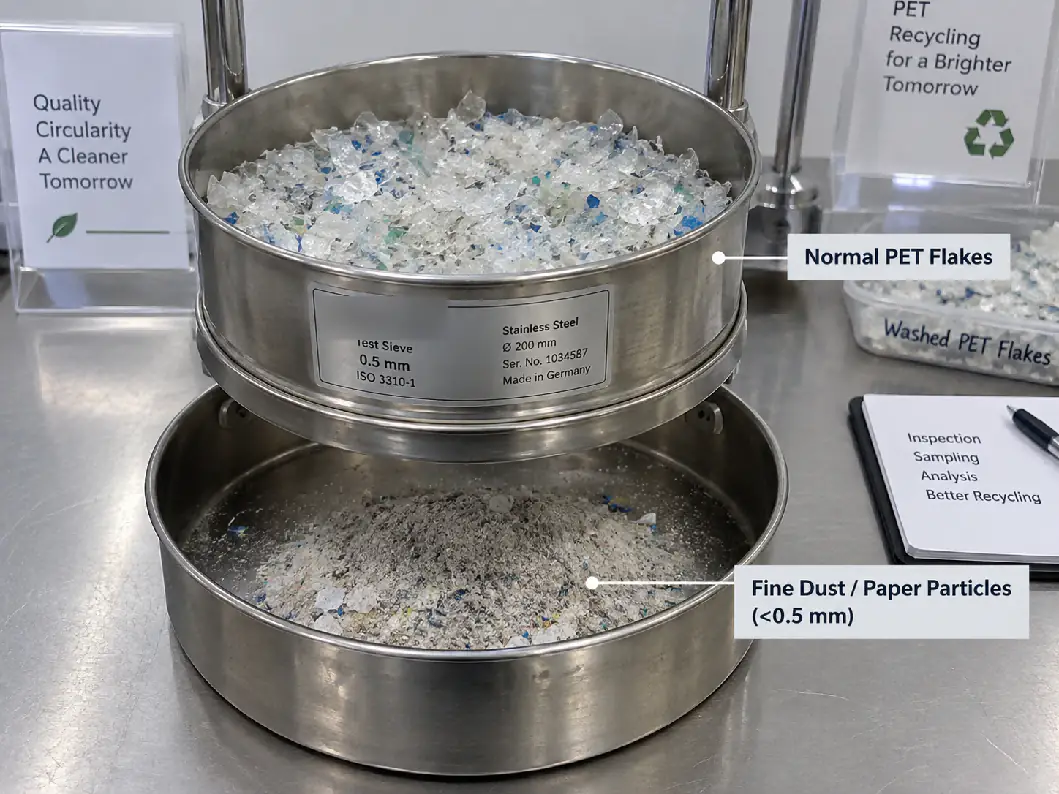
Fine dust includes very small PET particles as well as paper fibers, dirt and other solids generated during crushing and washing. Even when the material is still PET, excessive fines create operating problems.
Fine particles have a much higher surface area relative to their mass. They retain more moisture, carry contamination, increase dust in handling and behave differently during drying and conveying.
Published high-quality flake specifications commonly define a cut-off size for fines, for example below 0.5 mm, and then limit the amount allowed. Some recycling-process specifications use values around 500 ppm, while other industry specifications use percentage limits. Because the definition of ‘dust’ varies, the sieve size and test method must be written into the specification.
Where does excessive fine dust come from?
- The crusher screen opening is unnecessarily small.
- Crusher knives are dull, causing repeated impact and grinding instead of clean cutting.
- Material stays in the crusher chamber too long.
- Dry crushing generates more loose fines than a well-controlled wet-crushing process on some bottle streams.
- Paper labels break down during washing and are not removed effectively.
- Conveying, drying or aggressive mechanical handling causes additional breakage.
Reducing fines therefore starts at the plastic crusher. Sharp knives, the correct screen size and stable feeding produce cleaner, more consistent flakes before washing even begins — see crusher blade maintenance.
Polyolefins: caps, rings and labels
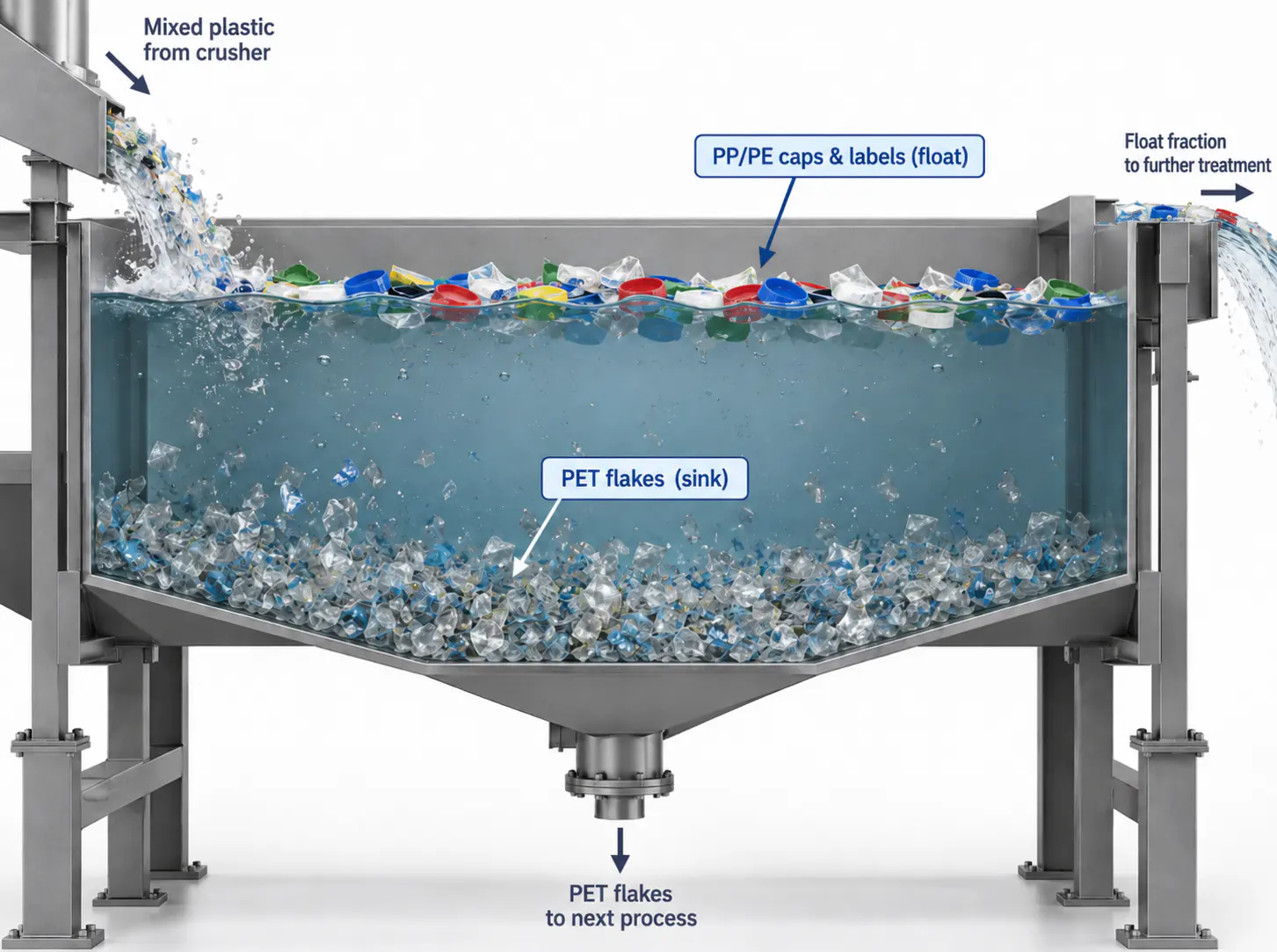
PP and PE are common contaminants in a PET bottle stream because caps, tamper rings and many labels are made from polyolefins.
Their density is lower than water while PET sinks, so a correctly designed float-sink tank removes a large proportion of PP and PE after crushing.
Density separation works only if the flakes are released from one another and the tank has enough residence time and water movement. Label fragments glued to PET may sink with it, and very small polyolefin particles may be carried along with the PET fraction. High-quality lines therefore combine bottle delabeling, float-sink separation, friction washing and, where required, flake sorting rather than relying on one tank.
Metals: low concentration, high risk
Metal contamination can come from bale wires, aluminum closures, foreign packaging, machinery wear or scrap mixed with the bottles.
Even a small metal piece can damage crusher knives, pumps or extrusion equipment, and metal particles create defects in sheet, pellets and final products.
Metal control normally starts before the crusher with sorting and magnetic separation. Eddy-current separation, metal detection or downstream optical inspection may be added depending on the contamination and quality target. Several high-quality PET flake specifications use metal limits in the tens of ppm; as with PVC, the allowable value should be agreed with the end user.
Flake size is a quality parameter, not just a crusher setting
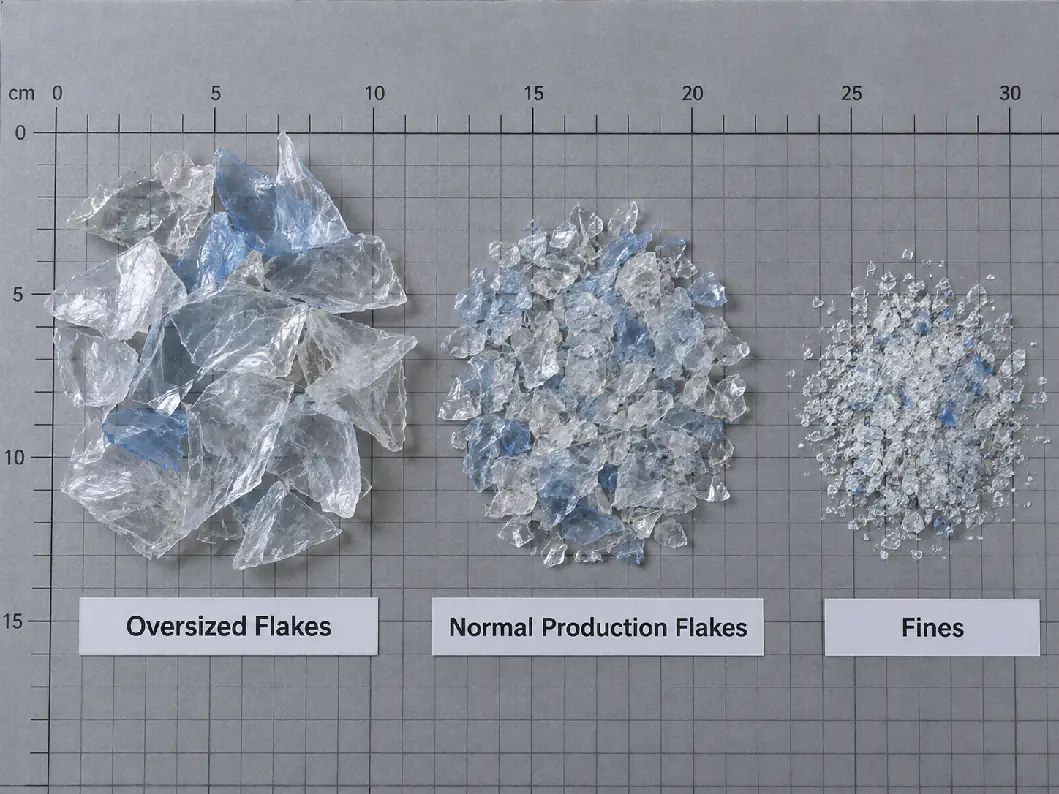
Flake size affects washing, separation, drying, conveying and extrusion. Very large flakes trap labels and water and may not clean evenly; excessively small flakes increase fines and may be lost with process water.
Commercial washed PET flake specifications commonly use controlled ranges such as roughly 3–12 mm or around 8–12 mm, depending on the market and equipment. Our PET washing lines are usually configured for 12 mm or 14 mm screens, or a customized size that matches the downstream process.
The crusher screen does not produce identical flakes. Bottle wall thickness, knife condition, rotor speed and residence time also shape the size distribution.
Bulk density tells you more than it first appears
Bulk density is the mass of loose PET flakes per unit volume. It affects silo size, conveying behavior, dryer loading and extruder feeding.
Washed PET flakes are often reported in an approximate 250–500 kg/m³ range depending on flake size, wall thickness, color mix and compaction. An unstable bulk density can point to inconsistent flake size or feedstock composition, so it is useful both for equipment sizing and for checking batch consistency.
Color: clear, light-blue and green PET flakes
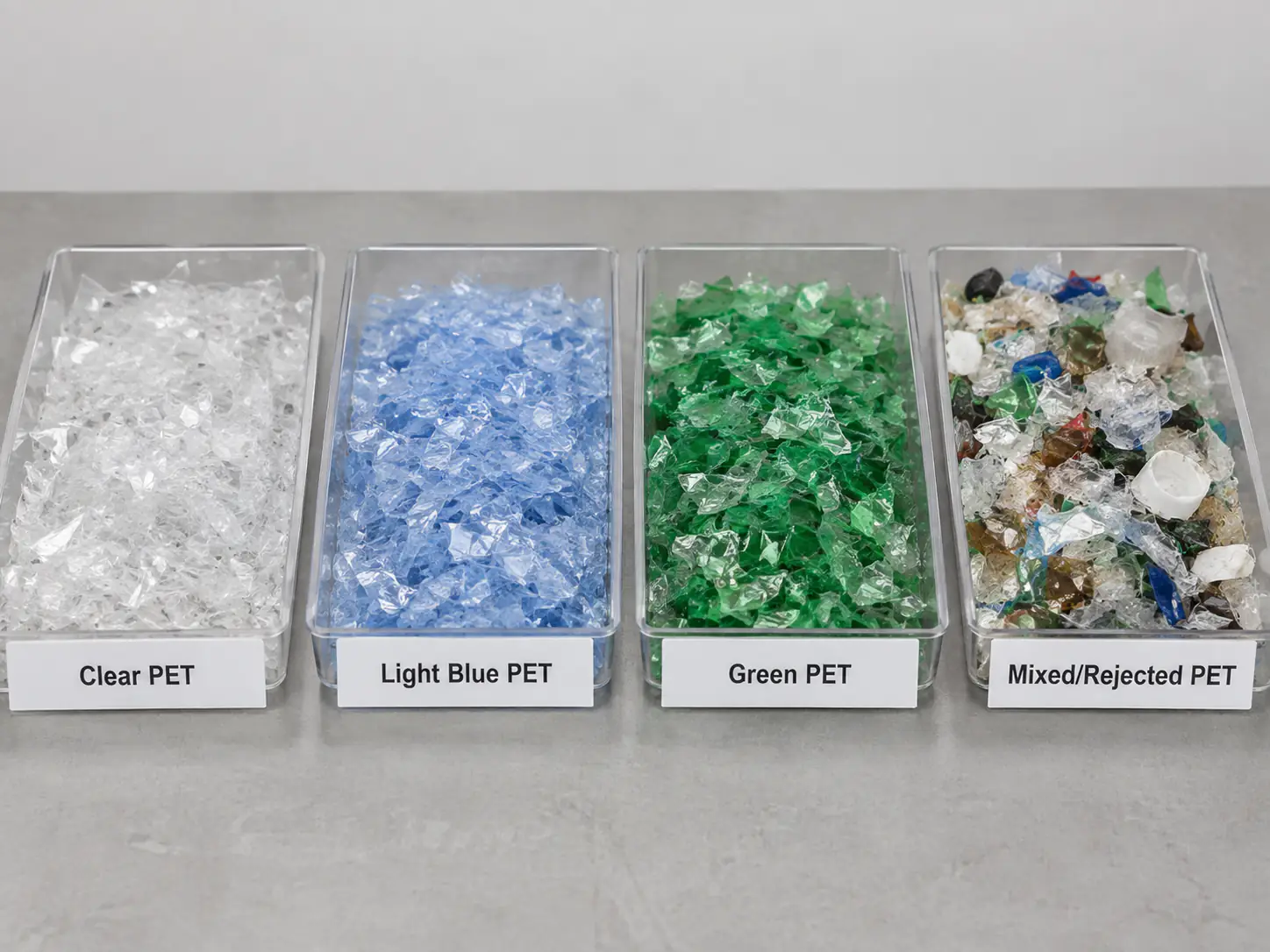
Clear, light-blue, green and other colored PET flakes are all chemically PET, but they do not have the same commercial value. Transparent sheet and bottle applications require much tighter color separation than many fiber applications, and green PET flakes are usually sold into separate, lower-value markets.
Optical bottle sorters and flake sorters separate colored PET, opaque PET and foreign polymers. For high-value clear flake, color should be part of the written specification rather than judged from a photograph.
A practical PET flake quality table
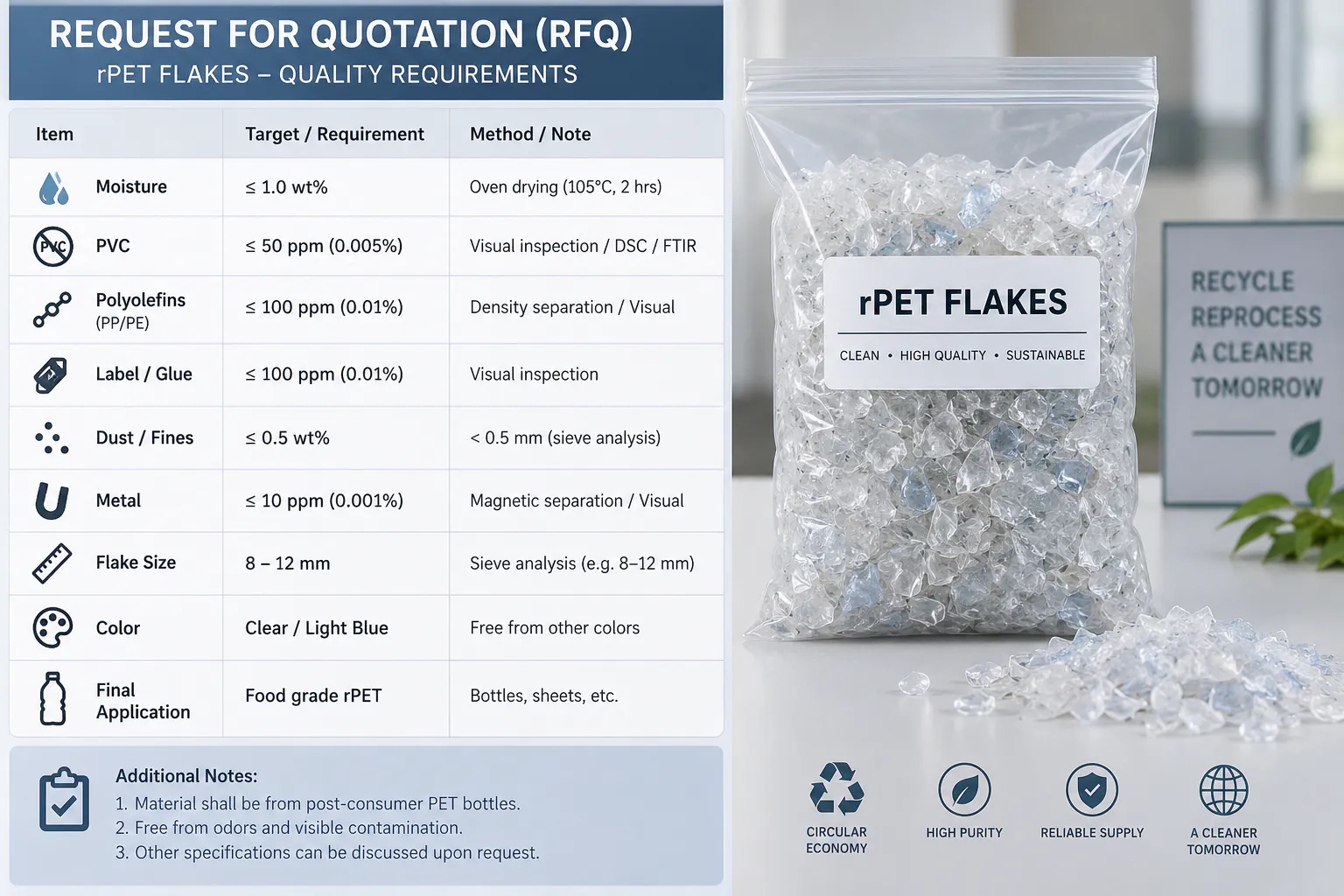
The table below is not a universal standard. It shows how a buyer can structure a specification and gives examples of the tighter ranges seen in published high-quality recycling inputs and commercial flake specifications.
| Parameter | Why it matters | Example high-quality target | Main equipment affecting it |
|---|---|---|---|
| Moisture | Drying, storage and PET hydrolysis downstream | Often ≤1% for washed flakes; extrusion needs further drying | Centrifugal dryer, thermal dryer |
| PVC | Degrades and discolors PET during melt processing | Tens of ppm; some food-contact inputs specify <50 ppm | Bottle sorting, label removal, flake sorting |
| Polyolefins | Caps, rings and labels affect purity and melt filtration | Tens to low hundreds of ppm, depending on grade | Float-sink tank, delabeler, flake sorter |
| Labels / paper | Visible defects, ash and filter loading | Buyer-specific; high grades use tight ppm limits | Delabeler, friction washer, rinsing |
| Residual glue | Yellowing, charring and black specks | Buyer- or process-specific; monitored separately on high-value routes | Hot wash, chemical dosing, friction washer |
| Fine dust | Moisture retention, handling loss, filter loading | Defined sieve cut-off, e.g. <0.5 mm, with a tight limit | Crusher knives and screen, washing, air separation |
| Metals | Equipment damage and product defects | Tens of ppm for high-grade flakes | Sorting, magnets, metal detection |
| Flake size | Washing, drying, conveying and feed stability | Controlled range from several mm to about 12–14 mm | Crusher screen and knife condition |
| Bulk density | Silo, dryer and extruder feeding | About 250–500 kg/m³, grade-dependent | Flake geometry, sorting, handling |
For reference, we quote our standard PET bottle washing line configurations for post-consumer bottle feedstock against these output targets: moisture <0.9%, PVC <50 ppm, PP/PE <20 ppm, labels <20 ppm, glue <10 ppm, metal <20 ppm, total impurity <100 ppm, and a flake size of 12 mm, 14 mm or customized. Actual results depend on the incoming bottles and the sorting equipment installed, and are confirmed by a material trial.
Why the sampling method matters
A laboratory result is only as good as the sample. One handful taken from the top of a big bag may not represent a production lot.
PET flakes segregate during conveying and storage. Fines may concentrate in one area, while heavier contamination or colored flakes may not be evenly distributed. Samples should be taken from multiple points or according to an agreed procedure and combined before testing.
Supplier and buyer should agree not only the limit but also the test method, unit and sampling frequency. ‘PVC ≤50 ppm’ and ‘dust ≤500 ppm’ are incomplete if one party uses a different test method or particle-size definition.
TDS and COA are not the same thing
A Technical Data Sheet (TDS) describes the target specification for a PET flake grade. A Certificate of Analysis (COA) reports the measured result for a specific batch or production lot.
For regular purchasing, the COA is more useful for checking consistency. It can include moisture, PVC, polyolefins, labels, metals, flake size, bulk density, color and other agreed parameters.
If a supplier claims high-purity flakes, ask which values are guaranteed, which are typical, how often they are tested and whether a lot-specific COA is available.
Which washing-line section should you check when quality is out of specification?
| Quality problem | Likely process area | Typical checks |
|---|---|---|
| High moisture | Dewatering and drying | Dryer load, rotor condition, hot-air volume, drainage |
| High PVC | Bottle sorting, label removal, flake sorting | Bottle-sort efficiency, sleeve removal, sorter calibration |
| Too much PP/PE | Float-sink separation | Water level, residence time, agitation, float removal |
| High label content | Delabeling and friction washing | Delabeler efficiency, bottle condition, friction-washer load |
| High residual glue | Hot wash and post-hot-wash friction rinse | Temperature, chemistry, residence time, rinsing |
| High fines / dust | Crusher and air separation | Knife sharpness, screen size, residence time, dust removal |
| Metal contamination | Sorting and metal separation | Bale-wire removal, magnet and metal-detector performance |
| Inconsistent flake size | Crusher | Screen wear, knife gap, knife condition, feed stability |
What quality information should a washing-line buyer specify?
When requesting a PET washing line, do not provide only capacity and bottle type. If possible, specify the expected output quality as well:
- Final application: fiber, strapping, sheet, pelletizing or bottle-to-bottle preparation.
- Required moisture limit after washing and drying.
- Maximum PVC contamination.
- Maximum polyolefin contamination.
- Maximum label, paper or visible contamination.
- Whether residual glue is controlled separately.
- Maximum metal contamination.
- Required flake-size range and fine-particle limit.
- Required color composition: clear, light blue, green or mixed.
- Required bulk density if downstream handling depends on it.
- The test method or buyer specification used for each critical parameter.
If you do not yet have a final specification, a supplier should first ask about the end market and then propose realistic targets based on the raw material and the selected sorting and washing equipment. You can send us your bottle source and end use for a proposal.
Conclusion: quality is created across the whole line
PET flake quality is not created by one hot washer, one separator or one optical sorter. It is the result of the complete process.
PVC control starts with bottle sorting and label removal. Polyolefin removal depends on float-sink separation. Glue removal depends on hot washing and strong rinsing. Fine dust is influenced by crusher condition and particle-size control. Moisture depends on mechanical and thermal drying. Metals must be removed before they damage equipment or reach the final product.
A professional PET washing-line specification therefore connects every quality target to the equipment responsible for it. The useful question is not ‘Can your line make clean PET flakes?’ but ‘What moisture, PVC, label, glue, fines and other contamination levels can this line realistically achieve with my raw material, and how will those values be tested?’
Frequently asked questions
What moisture content should washed PET flakes have?
Washed PET flake specifications commonly ask for moisture around or below 1%; our standard lines target below 0.9% for post-consumer bottles. This is the moisture after washing and drying — PET still needs further controlled drying before extrusion to avoid hydrolysis and IV loss.
What PVC level is acceptable in PET flakes?
High-quality PET flake specifications keep PVC in the tens of ppm, and some food-contact recycling inputs specify below 50 ppm. Lower-grade fiber markets may accept more. The limit is set by the end user and only means something together with an agreed test method and sampling plan.
What is the difference between hot-washed and cold-washed PET flakes?
Cold-washed flakes are washed in ambient water with float-sink separation and friction washing, which removes loose dirt and most caps. Hot-washed flakes also pass through a heated, usually caustic, washing stage and rinsing, which removes much more glue, oil and organic residue. Hot-washed flakes are the usual starting point for sheet, strapping, pelletizing and bottle-to-bottle use.
What is the difference between a TDS and a COA for PET flakes?
A TDS (Technical Data Sheet) states the target specification for a flake grade. A COA (Certificate of Analysis) reports the measured results for a specific lot. For ongoing purchasing, ask for lot-specific COAs and check which values are guaranteed and which are only typical.
Why do PET flake prices differ so much?
Price follows quality and usability: color (clear vs light-blue vs green), washing level (unwashed, cold-washed, hot-washed), PVC and polyolefin content, glue, fines, moisture and batch-to-batch consistency. Clear, hot-washed flakes with tight, documented limits command the highest prices.
Flake quality targets
Not sure what flake quality your line can reach?
Tell us your bottle source and end market. Our engineers will propose realistic quality targets and the sorting, washing and drying configuration to reach them, and can test your material.
Get a quality proposal- Final application of the flakes
- Bottle source and label types
- Target limits for moisture, PVC and PP/PE
- Test methods your buyer uses